Today, we’re going to be talking about cooking vegetables – building flavor, making them taste good, and keeping them nutritious. This is part of our basic cooking skills series – cooking skills you should master.
Cooking vegetables well is about more than just getting them to be soft. Our goal is to get a pleasing texture in the mouth, the right color and the right flavor and to preserve the nutrients in the vegetables. Let’s talk about methods of cooking vegetables so that even your kids will love them!
We need to know what methods work best for which vegetables. For example, cooking vegetables in water will leach the nutrients and the color out of them, which is fine if you’re making soup because then the liquid remains. But if you’re throwing away the liquid, then that’s not great.
Steaming Vegetables – An Ideal Method
Steaming is one of the best ways to cook vegetables. They should generally be tender enough to eat comfortably, but should still retain a little firmness.
There’s a nice bright green color of broccoli when it’s just ready. That little bit of firmness that’s left really makes them delicious, and ensures they remain nutritious.
There are different types of steamers available. Electric steamers are useful because you can just turn it on and leave it – you don’t have to watch it.
However, most of those are plastic, and to steam something inside a plastic container isn’t healthy. We used to have a stainless steel electric steamer, and it had trays that you could stack on top of it, and put different foods in there to steam. When it died, though, we couldn’t find another one that was stainless steel.
There were glass ones available, and that’s also a good option, but what we found easier was a little stainless steel tray that you slip inside a pot. It’s got holes in it, and it flaps up and down to make it a different size. It can fit in many different pots, and then you can add the right amount of veg. You put water in the bottom of the pot, and let it steam. You have to remember to turn it off in time so that the water doesn’t run out. It’s usually fine for twenty minutes to half an hour if you add water up to the base of the metal steamer.
That works great, and you can also get a bamboo steamer, which you put on top of a pot. It’s also got different layers, and a lid. This is used in a lot of Chinese cooking. Again, you need to watch out for when the water runs out, but it works really well, and it’s a good, healthy material to steam in.
Steaming is a very good, simple way to cook vegetables, because it tastes so good. It preserves the natural flavor of them. Basically, you steam it and eat it. You can add a bit of salt if you want to, or a bit of butter, but it always tastes good with nothing. Not even salt is necessary, which is great.
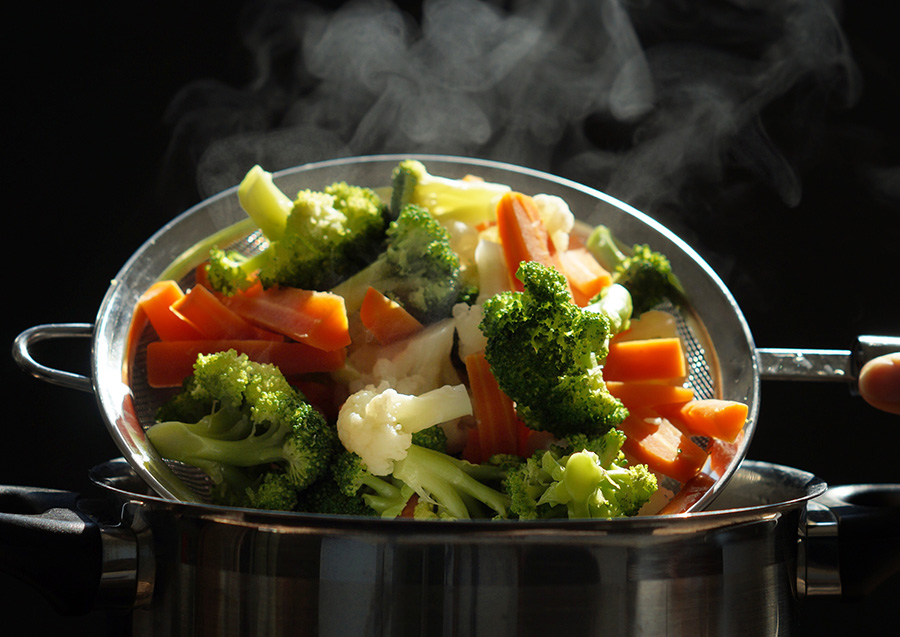
So, first put the water in your pot, put the steamer there, and then bring it to a simmer or a boil. I usually put the vegetables in immediately while the water’s heating. Some people say to wait until it’s simmering, but I don’t think that’s necessary. The key is to not overcook them, and to remember that they’re going to cook a little bit more once you turn the plate off, before you take the lid off. If you want them to stop steaming immediately, then you need to actually take the whole steamer out of the water, and that’s a bit of a pain. It’s best to slightly undercook them until they’re a nice color and a good firmness, and then let them finish with the lid on.
Long-stem broccoli needs to be bright green, and then you can poke it to test it. It shouldn’t be too soft, and definitely not squishy. I often overcook mine because I forget about it, and it seems like it’s not quite ready, but it’ll continue cooking for a little bit even if you take it out of the steam. You can always turn the steamer pot on for a bit longer if you’re not sure whether it’s done. You want to turn it off a bit early, but then sometimes it ends up being a little hard.
Also, if you’re steaming it ahead of time, and you’re going to reheat it a bit later, then it’s good for it to be a bit underdone. I usually find that twenty minutes to half an hour is enough. With some vegetables like green beans and broccoli, twenty minutes is probably best, and half an hour is probably a bit long. Things like asparagus should remain vibrant and bright, not turn dull or olive green. Whole artichokes, which are my favorite food, take a little longer – half an hour or maybe even a bit more. Just poke the vegetables with a fork when you think they should be ready. Take the lid off and check, and then you’ll know how long they need.
Then, after you’ve finished steaming them, you can add your salt, butter, or olive oil. Lemon juice is nice on things like broccoli, or you can even add a little grated cheese – that’s very nice with cauliflower.
Soups – My Personal Favorite Way to Eat Vegetables
My favorite way to use vegetables, in fact, is in soups. I think that it tastes the best, and you get the best nutrition because you can add things like bone broth. We quite regularly make cauliflower soup and broccoli soup. Those are so easy! You just put some bone broth or stock from the stock pot into the bottom – about four to six big ladles, and then you add a whole lot of broccoli or cauliflower florets.
For our family of seven, we do about three heads of broccoli or cauliflower. After that, you add salt. You can add a little water if you need to, but you don’t want to add too much water because it’s great if these soups are thick. Bring the liquid up to about halfway up the vegetables in the pot. Then put the lid on and cook it for about half an hour, or until the vegetables are soft. We usually add a couple of potatoes to the broccoli soup, but it’s not necessary for the cauliflower one.
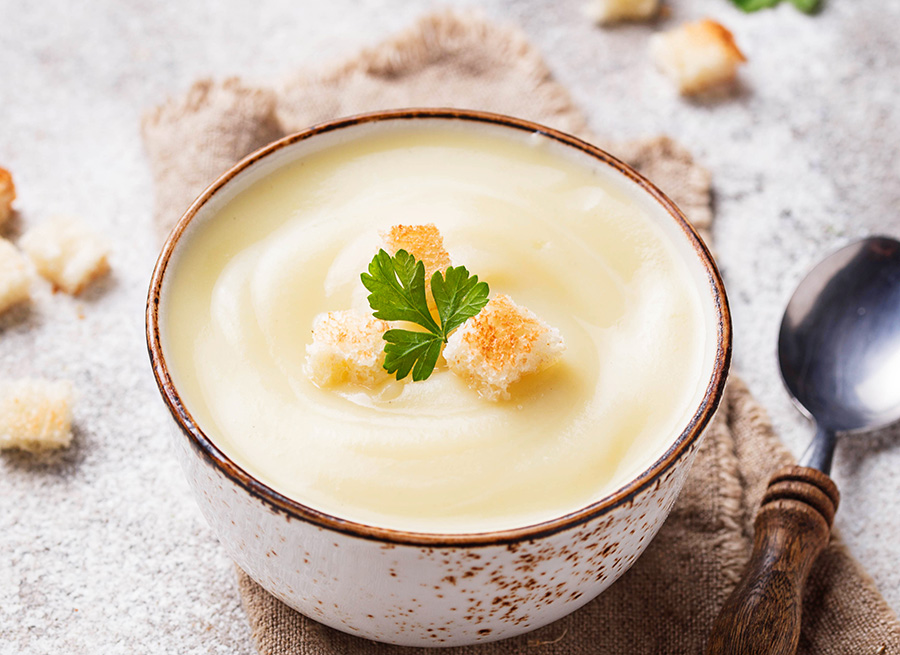
Then blend them at the end. You can add onion powder or herbs if you want to, but we like to keep these soups clean and easy. They taste so good! When you blend them at the end, you can add cream, or coconut cream if you prefer not to have dairy. You can grate a little cheddar cheese in there, and it gives them a great flavor. Obviously, season them at the end. Add salt if you need to, and a swirl of olive oil when you serve them.
I put those soups in the fridge or the freezer to have daily, or we have them as an appetizer for a meal. It’s a great way to get your vegetables in. It’s one of the favorite ways for the kids as well.
If you’re making a more complex soup, or even a stew, like a potato and sausage soup for example, then you’re going to start with a mirepoix. That’s a French word for the base of the soup. The vegetable base is usually two parts onion, one part carrot, and one part celery by weight. Chop all of those vegetables a similar size, and then gently cook them in butter, or coconut oil, or whatever oil you use. Don’t brown them, but you want to start to soften them, and release those natural flavors.
That’s the foundation for the soup or your stew. It’s the aromatic foundation, they say, because it’s got a lot of flavor. Starting with those veg gives the soup a base of flavor, and then you’re going to add whatever else you need. If it’s a potato soup, you can even sweat your potatoes along with those vegetables. Then you’re going to add your broth, water, and your seasonings – your herbs, spices, et cetera, and cook that. Then you cook your sausage meat separately until it’s nice and caramelized, and add that near the end.
Soups work really well once you have that base. You can add basically any other vegetable. You can add zucchini to make a zucchini soup. Our soup that we make regularly is very simple – it’s just got the cauliflower or broccoli. But you can certainly add this vegetable mirepoix to the soups you make, and it’ll bring out the flavor and make them more complex. Those soups are always delicious.
So, be creative, have some broth ready, and then decide what kind of soups you want to try. Vegetables are very forgiving in soups especially, and they work out very well. You can blend your soup, you can leave it chunky, or you can partially blend it. You could take some of the chunks out, blend what’s left, and then put them back.
Another soup that we love, which I mentioned in the previous episode, is a lentil and barley soup. This one’s also made in a broth base, and you also start with a mirepoix. Then you add a whole packetful of red lentils, a couple tablespoons of barley, one grated potato, and one grated carrot. Then add some onion powder, some salt, and some herbs like basil or oregano. When you’ve added everything, cook it on low for a few hours until the red lentils have disappeared – been incorporated into the soup to make it thick.
You don’t blend this soup, although you can a little bit if you want to make it smoother, but it’ll still have a nice texture. Or you can just leave it as it is and enjoy it. Of course, you need to season it again at the end – make sure you add more salt and whatever you think it needs. As you’re cooking soups, you need to taste as you go to add the layers of flavor, especially towards the end, and at the beginning when you put the vegetables in.
When you’re making a stew with vegetables, you’re also going to start by softening those onions, carrots, celery, and maybe some garlic – add that a bit later because it burns quickly. You just need to soften them and release their natural flavors, and then you’re going to add whatever else – your stock or broth, tomatoes, water, browned meat, beans, et cetera. Then you put that either in a pot on the stove, in the oven, or in a slow cooker or crockpot. Those work really well for stews – they make the vegetables in them nice and tender, and the flavors nicely incorporated throughout.
Roasting Vegetables
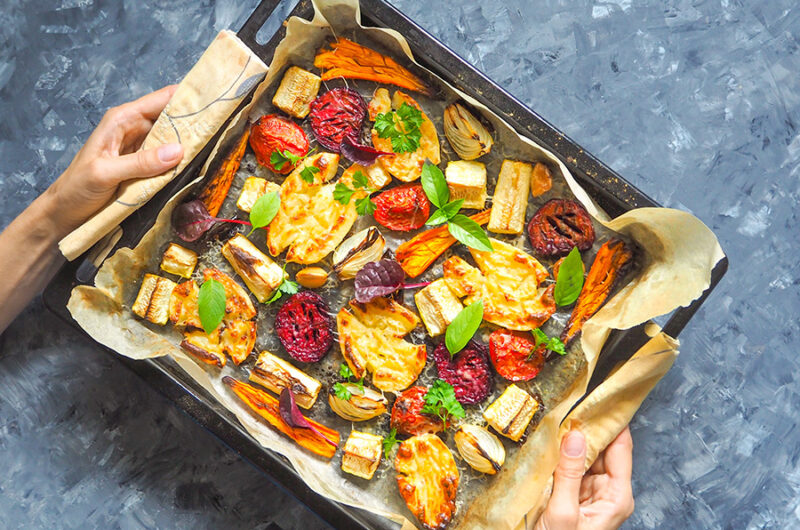
Another method is roasting your vegetables. Roasting brings out a different character in the vegetables. Because of the high, dry heat in the oven, you’re going to get that sweetness, caramelization, and browning. It’s going to be a deeper, sweeter, more concentrated flavor.
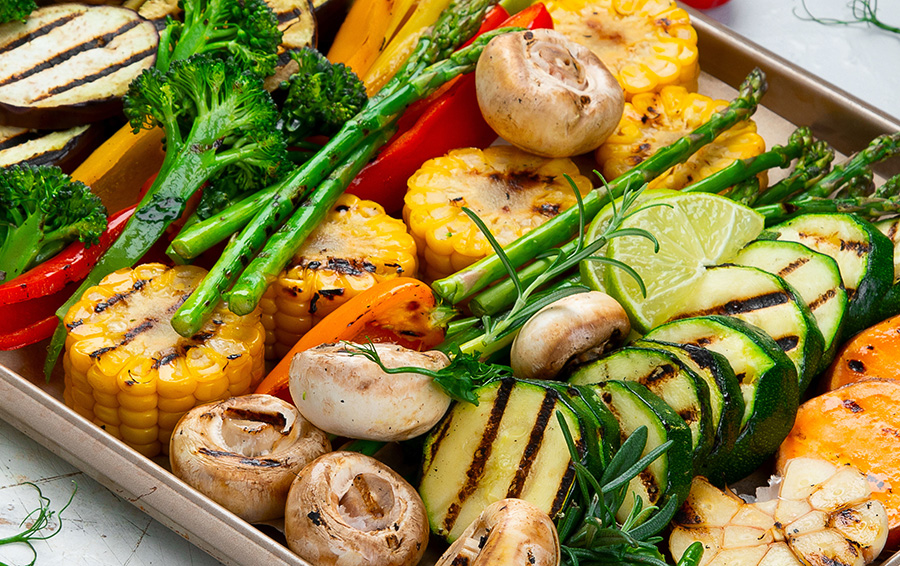
This works great for something like butternut. Steaming butternut or pumpkin is going to give you a lighter flavor than roasted vegetables. If you roast your butternut in the oven, it’s going to be sweeter and more caramelized, and have a richer flavor. A very basic, easy way to do it is to put the vegetables on a baking tray with some oil and salt. This works best if the pieces are quite small. Chop the butternut squash or pumpkin quite small, and then roast it with oil and salt. That’ll bring out the flavor, and it’ll be nice and crispy, and hopefully soft on the inside.
If you have bigger pieces, and you want to make sure they get tender, then it’s better to roast them in some kind of closed dish, because then it adds steaming to the roasting. Just dump a whole lot of butternut pieces into a glass or ceramic dish, add your oil and your salt, and then put the lid on. This method takes about half an hour to forty-five minutes to produce nice, tender, caramelized vegetables.
As I said, we do butternut squash and pumpkin in the oven. Sweet potatoes and potatoes also work well – you can just put them whole in the oven. Wash them, put them on a baking tray, and again, sprinkle them with oil and salt. That’s my favorite thing to do. Olive oil is great for this – it gives a good flavor, and it doesn’t get too hot and become rancid.
Generally, you’ll roast your vegetables at about 180 Celsius, 360 Fahrenheit. If the oven is too hot, then they can burn before they’re soft. You can also do vegetables like broccoli and Brussels sprouts in the oven on a baking tray, but I’m not crazy about that – I prefer those ones to be soft in the steamer. You could also do those in the oven with the lid, and it’ll work better, because then they’ll get more tender. Some people like crispy Brussels sprouts, but I like them tender.
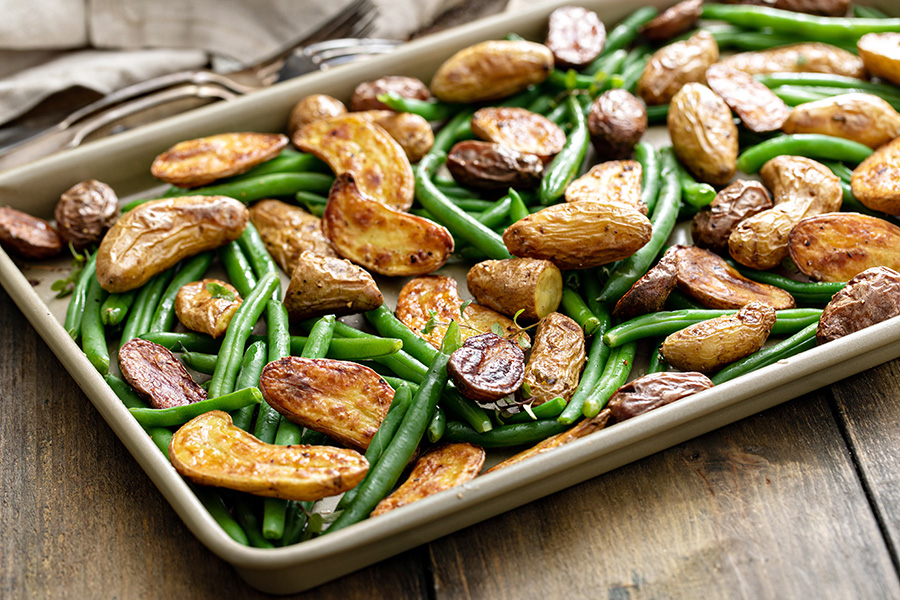
You can also do carrots in the oven in a closed baking dish. When you add your oil and salt, you can toss your vegetables slightly, and you can even add some herbs. Then halfway through the cooking, you should also toss them a little bit. The basic principle is the larger the pieces, the longer they take to cook. You want to make sure the outside doesn’t burn before the inside is soft. If you’re cooking on an open baking tray, use smaller pieces, but if it’s a dish with a lid, then it doesn’t matter as much.
Caramelizing – A Great Flavour Enhancer
Caramelizing is one of the great things you can do to vegetables, especially to things like onion. Caramelized onions are delicious. When vegetables are cooked long enough for their natural sugars to brown, then they develop a deeper, sweeter, more complex flavor. Raw onion is sharp and pungent, but slowly cooked, caramelized onions become soft and sweet and deeply flavorful.
When you’re sautéing vegetables, and you want that good caramelization, then it’s best not to move them around too often in the pan, but just enough to make sure they don’t burn. Just check them and move them now and then, but don’t constantly move them. That’ll help them to get that good caramelization and deep color.
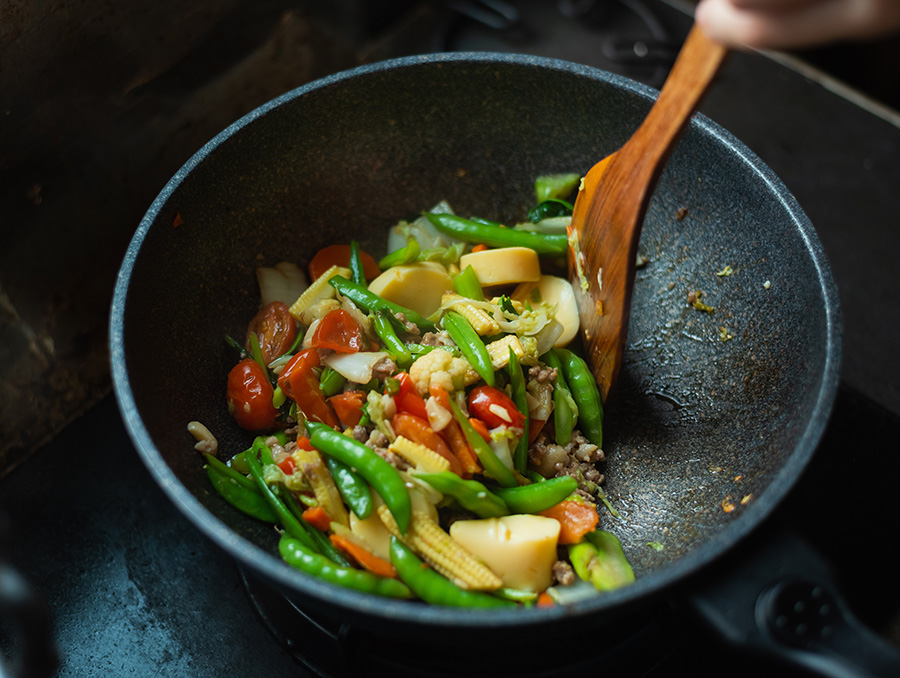
Some good vegetables to caramelize are mushrooms, Brussels sprouts, cabbage, and even carrots. Those are good for caramelization and browning. Also, if you’re cooking something like mushrooms, you may find that you need to put a lid on partway through to help. That little bit of steam always helps them cook properly. Otherwise they might brown before they’re soft. I always start by sautéing mushrooms in a bit of coconut oil with some salt, nutmeg, and paprika. Then as they start to caramelize, I add a lid and let them steam a bit. That helps them to be soft, as well as adding the beautiful caramelization to them
If you roast or sauté some vegetables, and you see the brown bits stuck to the bottom of the pan, you can deglaze it, and that makes a wonderful thing to add to your stews or soups. If you’re making a soup in the same pot, then those bits will naturally be added, but if you’re transferring it to the crockpot or a baking dish, deglazing is a great thing to do.
Deglazing is when you add a small amount of liquid to your hot pan. It could be stock or broth, water, wine, or any combination of liquids. That’ll soften the brown pieces and loosen them off the bottom of the pan. Then you scrape the pan and add that liquid with the bits of caramelized meat or vegetables to your stew or soup, to your crockpot or whatever. That’ll add a depth of flavor and make it really delicious.
Summary and Bonus Tips
Next time, we’ll talk about cooking starches – potatoes, rice, pasta, et cetera. In the meantime, here are some extra tips for cooking your vegetables well, as a kind of recap. Don’t cook all your vegetables the same way – think about what you want for each one. Tender vegetables like zucchini, asparagus, and spinach don’t need much cooking, whereas carrots, potatoes, pumpkin, or butternut squash need more time and a different method usually.
Cutting vegetables into similar-sized pieces is really helpful. That helps everything to be cooked evenly and well. Don’t overcrowd the pan, like with meat. Too many vegetables release a lot of moisture, so if you want them to brown, not steam, then don’t put too many in at once. You don’t want there to be liquid. Get the pan nice and hot before sauteing – let it heat after you add the oil, before you add the veg. You want to hear a gentle sizzle when they hit the pan if you’re browning them.
Dry your vegetables before roasting them, if you washed them. That excess water creates too much steam, and it can prevent the browning. This is especially true when you’re doing potatoes or vegetables like mushrooms that have been washed. Use enough oil for roasting, but don’t drown the vegetables. A light coating will help them brown and crisp up nicely.
Season throughout the cooking process – don’t wait till the end. Adding salt while cooking brings out the vegetables’ natural flavor. Then you can add a little at the end after tasting, but be careful not to add too much salt. Also, taste them while they cook to make sure they’re what you’re looking for. You can develop a sense of what a properly cooked green bean or broccoli floret should look, taste, and feel like.
Use some acid to wake up your vegetables. A squeeze of lemon, a little lemon zest, or some apple cider vinegar can make your vegetables taste really bright. It can brighten up broccoli nicely. Then remember that fat carries flavor, so adding some butter, olive oil, or sesame oil can make your vegetables much more satisfying. You can add a little bit of that at the end of the cooking process.
Don’t be afraid of browning – it doesn’t necessarily mean the vegetables are burnt. You want the balance with a deep, golden brown edge – that’s where you got a lot of the good flavor – without it burning. Preheat your oven before putting the vegetables in. That’ll help them to begin browning immediately. Delicate ingredients should be added later on, so don’t put everything in at the same time. Garlic can burn, and leafy greens cook quickly. Add fresh herbs to your soup or your stew near the end.
Don’t automatically peel everything. Potato skins can be great for fiber and nutrition. With sweet potatoes, make sure you scrub them well, but you can leave the skin on. Learn which vegetables like high heat, and which one don’t. Potatoes, cauliflower, Brussels sprouts, carrots, peppers, and onions work well with roasting, and like I said earlier; spinach and delicate greens need very little heat and time.
Also, use your cooking liquid. If you’ve steamed or blanched vegetables, don’t automatically throw the liquid away. You can use that in your stew with your vegetables. Remember to finish your vegetables rather than just cooking them. Ask yourself “Does it need more salt? Does it need some acid, like lemon? Does it need butter, olive oil, fresh herbs, cheese, some pine nuts sprinkled over the top, or a sauce?”
Then enjoy your wonderful vegetables. Even your kids will love them! Next week we’ll be back to talk more about starches and how to cook them well. Have a wonderful cooking week. Do things by trial and error, don’t put too much pressure on yourself, and just enjoy the process.