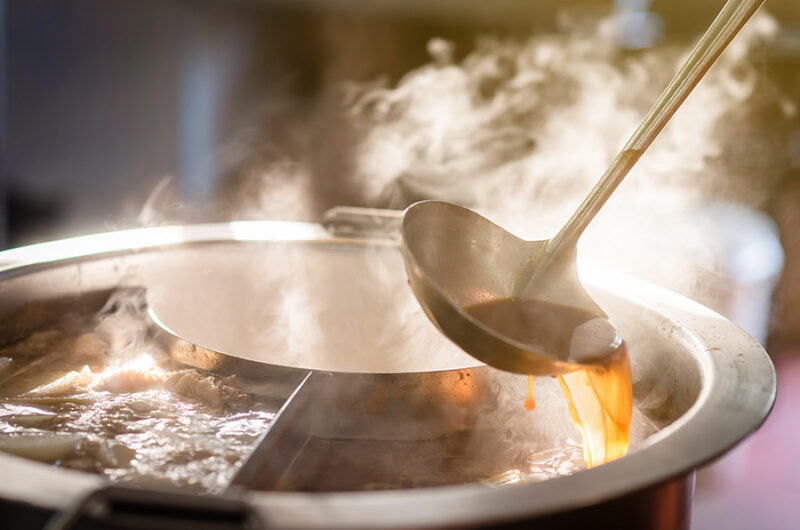
Today we’re going to be talking about cooking in sauces. Instead of making a sauce separately and then adding it later, which can be delicious, cooking in sauces is really going to enhance the meat or vegetable that you’re busy cooking. I wanted to talk about cooking in sources rather than adding them at the end. It’s one of the easiest ways to make your food deeply flavorful, juicy, and hard to mess up. It’s how many of the world’s best comfort food dishes are made.
So, what does cooking in sauce mean? It means that your protein or vegetables will finish cooking inside a liquid. They won’t usually start in there, because it’s good to brown the meat first, but the finishing part of the cooking will be inside a liquid like tomato sauce, curry, coconut cream, broth, ordinary dairy cream, et cetera. That way, the food absorbs flavor while staying moist. Think of chicken or fish simmering in a tomatoey sauce, fish poaching in coconut cream or milk, meatballs in a marinara sauce, lentils in a curry sauce, et cetera. This episode is part of our cooking skills series – basic skills that it’s good to know as a cook at home.
A Step-by-Step Overview of the Process
Think about the method for cooking food in sauce. Pretty much every dish of this type follows the same kind of flow, which has five steps. The first step is to build your flavor. That means you’re going to take some oil, like coconut oil, butter, or even olive oil, and you’re going to use it to cook aromatic things like onion, garlic, ginger, and even spices. Maybe you’ll chop an onion finely, and then add it to a pan with some oil or butter in it. Then you’d chop a bit of garlic, and add that a little bit later. Then lastly, you’d add a little bit of chopped ginger or some spices to the pan to toast them nicely.
Then secondly, you’re going to sear your meat. After it has sat out on the counter for a while, you can season the meat by adding some nice salt and pepper, and you sear it. You want a good hot pan for a nice dark sear that’s brown and deeply caramelized. You definitely don’t have to cook the meat all the way through, though. This is just to get the flavor going, to seal in the moisture, and to start the cooking process.
After that, you’re going to add your liquid. You finish off the meat in a liquid instead of just leaving it as it is, to finish in the oven or or in the pan. Add your sauce, which is maybe tomato puree, tomato and onion mix, stock, or maybe some cream. You can add coconut milk or coconut cream as well as or instead of your cream.
Then you’re going to turn down the heat and simmer it gently. This is where the magic happens. You have to make sure that it’s not too hot; not quite boiling, but almost – on the edge. Simmer gently, and the food will gradually cook in the sauce, and absorb the flavor from the aromatics and the sauce. Then it’ll be amazing and juicy and tender.
Step number five is to finish adjusting your seasoning. You’re going to add any fresh herbs at this point, because you don’t want them to cook too much. You can add some acid, like lemon juice, lime juice, or lemon zest. You can add some cream or butter if you want to make the sauce extra good. It changes the flavor of the sauce slightly – like if you have a tomatoey sauce, adding cream softens that sharp tomato flavor, and makes it lovely and creamy.
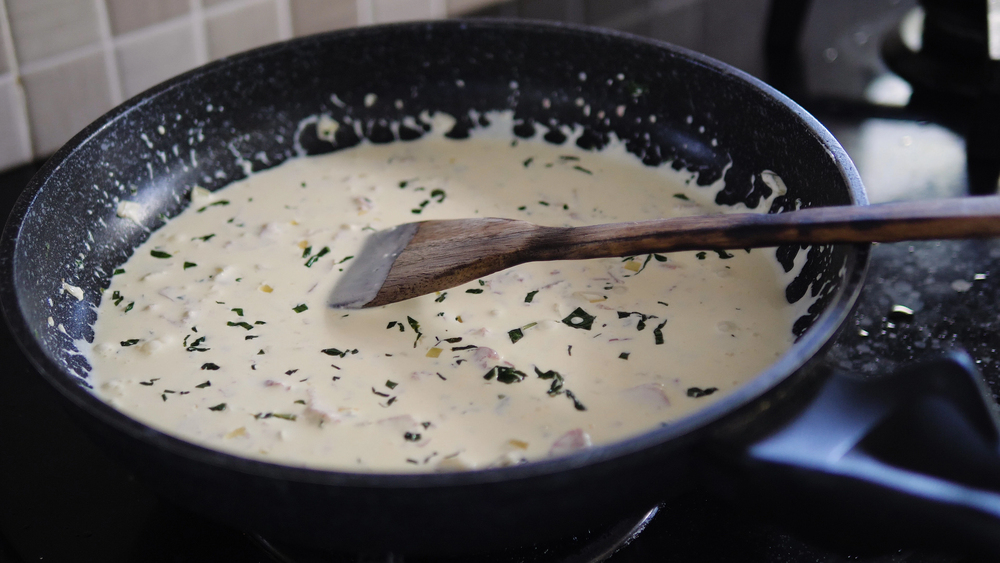
I’ll mention each step again quickly. First, you build the flavor by cooking your aromatics, then you brown or sear your meat, and then you add your liquid or sauce base. After that, you simmer gently, and then you finish by adjusting the seasoning and adding anything else you need to, like the cream. This method is fun because when you understand the structure, you don’t need recipes. You can just build a sauce and cook a protein in it.
The Specifics of Your Sauce
Here’s a formula for building the sauce, which is composed of exactly what we added during the steps. Firstly, there’s the fat, which carries the flavor. It could be butter, coconut oil, et cetera. Then there’ll be the aromatics or the flavor base, which as I said, is the onion, garlic, ginger, chili, and other spices. The third thing is the body, which is what it’s really made of, whether that’s stock, cream, coconut cream or coconut milk, tomato puree, et cetera.
Then there’s the seasoning – the salt, the herbs, perhaps more spices, or maybe something like soy sauce. You could add something sweet like honey if it calls for that. There should also be some acid like apple cider vinegar, lemon juice, lemon zest, et cetera.
So, let’s talk about tomato-based sauces. These are rich and comforting, and they still work if somebody doesn’t eat dairy. They work best for chicken meatballs, and white fish. That would be a Mediterranean fish bake – something like hake or cod would be delicious.
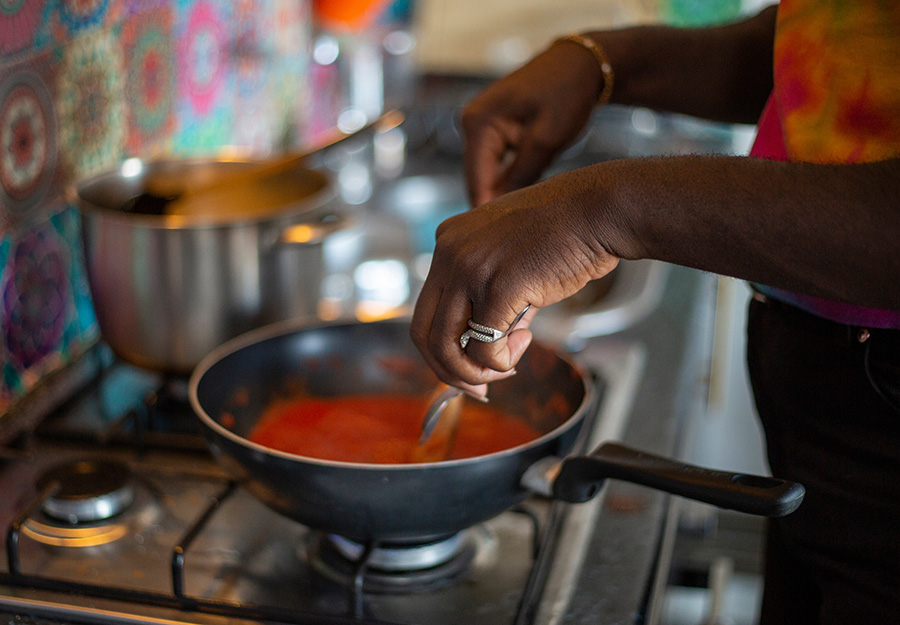
To make a tomato-based sauce, first you’re going to first cook your aromatics, like we’ve talked about. Then you’re going to sear your protein, except if it’s fish – you can sear fish at the bottom, though, if the skin’s still on. Then you’re going to add your sauce. Tomato puree is a safe one. If you like a bit of chunkiness, you can do a tin of chopped tomatoes, or chopped tomatoes with onion or basil. You could use crushed tomatoes, and you can even add a little bit of tomato paste for extra flavor. You can add some broth as well to this sauce, as it goes well. Just make sure it’s not too much, as we don’t want the sauce to be too thin.
Then you’re going to simmer gently until it’s cooked, and then season it at the end. If it tastes a bit too sour, you can add a bit of sugar. You can add olive oil and a bit of crushed garlic to the sauce, as well as some herbs like basil. That makes it amazing. You definitely shouldn’t boil it too hard because that toughens the meat.
Next let’s look at coconut cream sauce. This is soft and luxurious. When you get a tin of coconut cream, often it’ll be separated into the thick cream and the thin coconut water. You may want to pour out the coconut water and drink it or add it to a smoothie, and just use the cream because that’s lovely and thick. Or you could just add the whole amount because some of the moisture’s going to boil away anyways. These sauces work great for chicken, fish, shrimp or prawns, vegetables like chickpeas, or gnocchi.
Again, first you’re going to build your spice base. You may want to use curry paste or garlic. Then you’re going to add your liquid – your coconut cream or coconut milk. After that, you’re going to simmer gently over low heat. Both coconut cream and dairy cream should never boil, as that can make them split. They can simmer at a low heat. Then you’re going to add your protein and cook it in the sauce, and then you’re going to add your extra salt, herbs, or lemon zest. A great herb to use for fish is thyme, and it works well with chicken as well. Lemon zest really lifts something if you add it at the end.
Brothy sauces have a very light, kind of healthy, clean feeling. These work well for chicken and things like dumplings. You can even use a combination of broth and tomato sauce for meatballs. Broth sauce also works great for vegetables. First you’re going to bring your broth to a gentle simmer, and then add your ingredients and cook them slowly. Keep it barely boiling. This works well for tender, juicy results. You can add your herbs at the end for freshness.
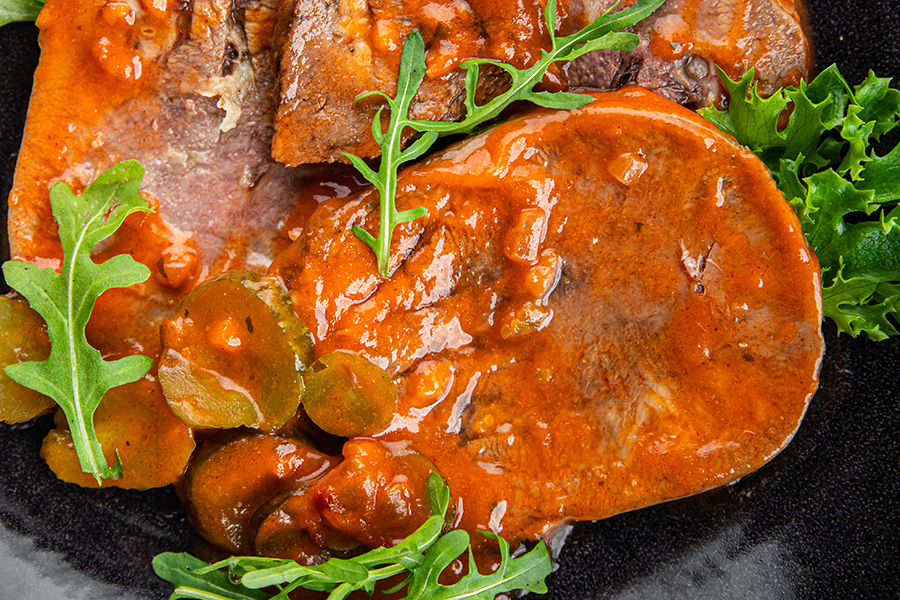
Then there are thick brazing sauces. These sauces are for slow and deep cooking, and work well in a crockpot. They’re good for tough cuts like beef, lamb, and pork shoulder. First you’re going to brown your meat well, and then add the thick liquid, which would be your stock, and maybe some red wine, which you would use to deglaze a pan after cooking your aromatics. Also, you can add a bit of tomato paste or tomato sauce to get a good flavor. Cook it low and slow for a few hours. The sauce thickens as it cooks, and the meat becomes very tender and falls apart. This works in the oven as well, but it’s perfect for the slow cooker.
Common Mistakes When Cooking in Sauces
One of the things we want to avoid when cooking in liquid or in sauces is boiling instead of simmering. That makes the meat tough, and it makes sauces split. Keep it gently bubbling. We want to avoid overcooking delicate proteins like fish and chicken, as they’ll dry out. They need to be just right to flake apart without being dry and overdone. You can add delicate proteins a little bit later in the cooking process, once the sauce is going. If it’s meatballs or beef steak, it’s great to add them right up front, but delicate fish has a shorter cooking time, so adding it a bit later is a good idea.
Another mistake we want to avoid is not seasoning in layers. It’s good to season your protein before you brown it or add it to the sauce. Then you can season your sauce by starting with the aromatics – cooking your onion, your garlic, spices, curry, chili, et cetera. Then when you’re finished cooking the protein in the sauce, you season it again. Make it taste really good by adding extra things like lemon zest, basil leaves, garlic, et cetera. We season at the beginning and the end – otherwise you’ll have a flat tasting sauce.
Also, you don’t want your sauce to be too thick or too thin. If it’s too thick, you can add a little broth or water, and if it’s too thin, you can simmer it without a lid on to reduce it a little bit. Don’t boil it too much, though – a gentle simmer is good.
Where to Start
It’s great to pair chicken with tomato sauce, cream, coconut cream, or broth. Fish goes well with broth, coconut cream, and maybe a light tomato flavor like Mediterranean fish. Beef and lamb go well with thick, slow cooked sauces. With veggies, everything works.
You should choose something to start with, and try something like either some chicken or some fish with coconut cream. Just try using these steps, and see what you like and how it turns out. Hopefully it’ll be easy for you to tweak a little bit and do what you enjoy. You can try a beef stew in the slow cooker with beef chunks, a bit of stock, tomatoes, carrots and potatoes. You could try doing fish with a lemon butter sauce. Add some lemon juice to a liquid that you like – your coconut cream or stock that you’re cooking your fish in.
You could make a chicken curry with chicken pieces, coconut milk, curry powder, onion, and garlic. You could do meatballs, even store-bought ones – that makes it easy. You can cook them in a tomatoey sauce with garlic and herbs like basil. Brown your meatballs first.
So, try some of these ideas, and see what works for you. One option I didn’t mention is the instant pot. That’s very good at tenderizing your meat. Generally it helps to add liquid in that – the meat cooks in that, and it helps to make it tender and juicy. For those things you’ll need a recipe, but look for something if you’d like to cook. Maybe you can do beef stroganoff or a beef roast. Even meatballs work well in the instant pot.
I hope you have some ideas from this that you can try, I hope you’re feeling inspired, and I hope you have a great cooking week.