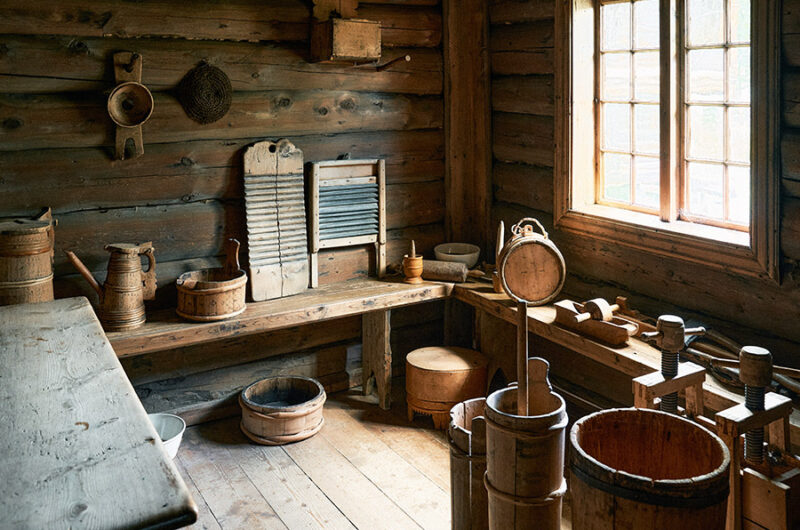
Today I want to talk about what we’ve lost from food cooking and nutrition since the 1900s. Back then, food was a lot more nutritious, home cooked meals were much more common, and there was much less refinement and processing. My middle daughter has been doing some homemaking reading and studying as part of her course this year. One of the books she’s reading is Mrs. Beeton’s Book of Household Management by Isabella Beaton, first published in 1861. It contains a lot of recipes, but also a lot of text about homemaking and cooking, how to plan it and execute it.
One of the things in this past section was about a sauce with broth in it for roast chicken. We all know that bone broth is great for us, and this is a caramel sauce with bone broth. It sounds kind of weird, but it was so delicious. It’s like a regular caramel sauce with sugar and butter, but then you add the bone broth. You use it with the roast chicken, either with or instead of gravy. Also, when you roast chickens, put bacon strips over them – that makes it extra delicious. We cooked the chicken in the crockpot and then we put bacon strips over and slipped it into the oven to crisp it up. We used some of that sauce, and it was really amazing.
I was just thinking about how differently we cook and eat these days. We’re really afraid of food that’s what I would call decadent. We want to just do chicken breasts or lean meat, and we do the same things over and over again. I don’t know about you, but in our family, probably because it’s cheapest, we repeatedly use chicken breasts and ground beef, and most of our meals are made up of those. Yes, it’s good because it’s cheaper, but existing on muscle meat is really not good for us.
So, I wanted to talk about some things that I feel like we’ve lost. I love looking at old menus from the 1900s from various countries, and just seeing how they ate. It’s quite amazing. If you factor in that they didn’t have snacks, and that they had all their meals really full and nutritious, then it makes a bit more sense. I’m going to talk about what things we’ve lost since those times from cooking, food, and nutrition.
The first thing is the real meat – the whole meat. Back then, they did nose to tail eating. They’d eat liver, they’d eat organs, and they’d eat the skin of the chicken. They’d cook whole chickens or whole birds of some kind, and lamb or beef on the bone, not just ground beef. It would be cooked slowly in a pot on the stove with some broth. They’d usually make a stew, so that all of the good gelatinous properties from that piece of meat would go into the food that they ate, into the broth and into the gravy, and onto your plate.
Instead of buying chicken breasts, which you couldn’t do in those days, they’d take the whole bird and use all the parts. It would be cooked with its cartilage and everything, they’d eat the skin, and there would be all that goodness in the meat. Then when they made broth or stock, they’d use all of those parts so that there’d be nutrition in the sauce.
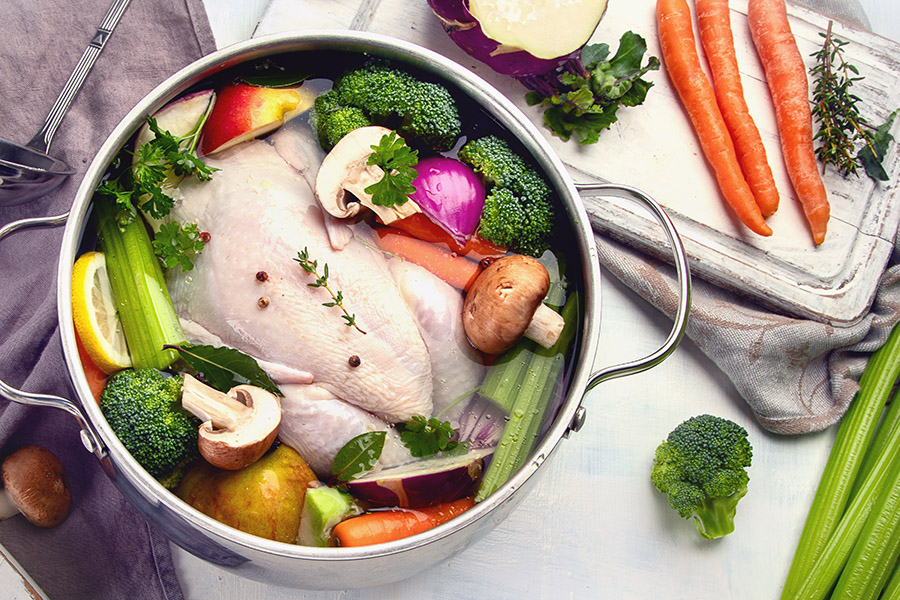
So, using whole meats, I think, is something that we’ve really lost, and I think it’s so important. It’s so easy to cook chicken breasts, but it’s just the same part of the meat over and over again. Use thighs when you make kebabs, and most of all, use whole pieces – pieces of chicken with the skin on, with the bone in. Cook a whole chicken, or two, or three sometimes like we do if they’re small.
Then you have the skin, you have the gravy, and you have the meat on the bone, and it’s got all those nutrients. You have the dark meat as well as the light meat. It’s actually so much more delicious. Then you have a gravy that has the goodness from the cooking process in it. Thicken it with a bit of potato starch like we use to make an amazing gravy, or you can try the caramel sauce. Use the bones and the parts of the chicken, sometimes the meat, in the gravy.
My daughter was reading a section of this book and telling me about it, a section about when you make broth. We usually just use the bones, but to add a little bit of the meat in is very valuable. There’s something called osmazome which is soluble when it’s cold, and that’s the part of the meat which gives flavor to the stock or broth. The flesh of old animals contains more osmazome than those of young ones, and brown meats or dark meat contain more than white. That makes the stock or broth more fragrant. By roasting the meat first, the ozmazome acquires higher properties. By putting the remains of roast meat into your stock pot, you get a better flavor and more nutrition. I found that very interesting.
Gelatine is soluble. It’s the basis and the nutritious portion of the stock. Where there’s an abundance of it, it causes the stock to become gelatinous when it’s cold. It’s important for that to happen when you make your broth. So, that’s very interesting and I found the book very useful.
It’s so important for us to be aware of these properties in our food. My husband has had a few struggles with back pain recently, even though he hasn’t for many years. I realized that I’ve really been neglecting things like broth and gummies made with gelatin in the past few months. Now I’m really going to be focusing on those extensively – making more stews, bringing back homemade broth or stock, and making soups with that. We’ll eat as much whole meat as we can, rather than just muscle meat – the chicken and mince. We’re going to be having roast chickens, roast lamb, and as I mentioned, some stews involving all the parts, and broths made with all the joints and some meat in there.
It’s very good to try to make broth regularly – it’s obviously a lot less expensive than buying it. If you have a good system set up each week, then you can have broth in your fridge all the time. I used to try to clean jars and use those, but it ended up being easier for me to just put a whole lot in a big glass container with a lid. Then I ladle it out of there as needed, keeping it in the fridge.
Here are a couple of other tips from this book on making broth. Never wash your meat. That deprives the surface of all its juices, and loses some nutrients. Also, make it over a gentle heat. That’s why the crockpot works so well, because it heats the food very gently. You can do it for twelve to twenty-four hours very safely.
Then also, removing the scum is important. It helps with the flavor. The albumin rises to the surface as scum, and that’s what you remove. Then, when it’s well skimmed, you can add the salt and the vegetables. First you need to dissolve that albumin at a low heat, and then add the vegetables. They use quite a lot in this recipe – carrots, turnips, parsnips, leeks, celery tied together, a piece of cabbage, even cloves, and onion, and they said a tomato adds a good flavor to the stock. I’ve never done that before, but it sounds good. As well as those vegetables, there’s the bones and a little bit of meat, et cetera.
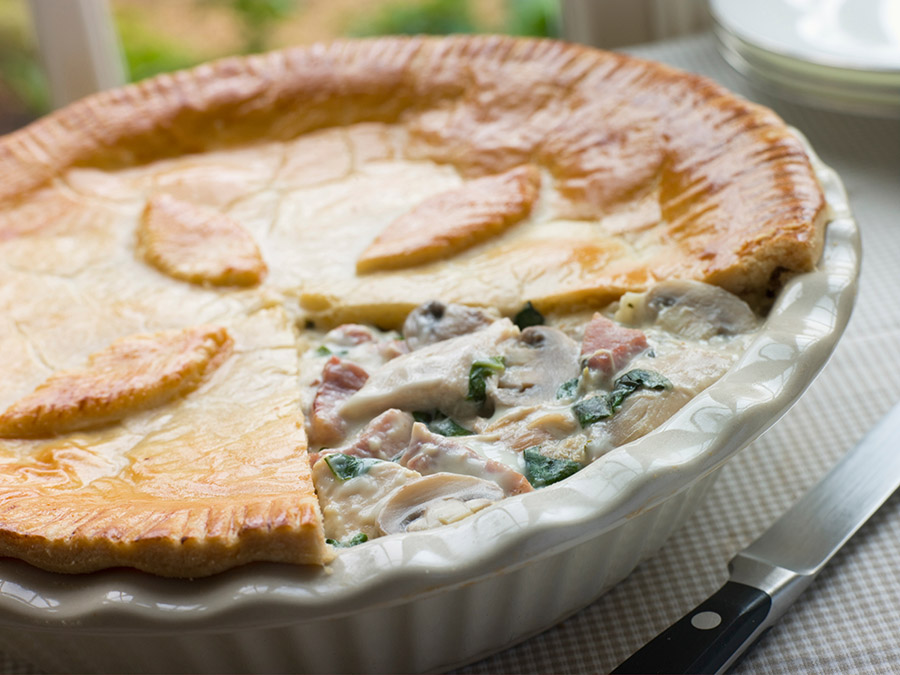
So, those are two of the most important things that we’ve lost in our cooking today – eating the whole animal with the gelatinous parts, the joints, and et cetera, and making broth and using it in your soups. For a base, cook up a little bit of celery, carrot, and onion. Then add your other vegetables, and then your broth and some seasoning. It’s very easy. Use broth in your whole meat or roasts as a base for gravy. Use it in your stews, et cetera, as much as possible.
Another thing we’ve lost, I think, is slow cooking. We cook so quickly these days, and it’s definitely healthier for you to cook things in the crockpot, or cook on the stove top in a pot over like six hours to get that nice tender meat. My grandmother always used to make oxtail in a big pot on the stove. It was always so delicious and meaty!
Another thing was cleaner fruits and vegetables. Unfortunately, we have so many pesticides on our fruit and vegetables today and it’s not easy to find organic options for all of those. Some are obviously better than others – it doesn’t matter as much with things like pineapples and bananas, as the pesticides are less of an issue inside, so those are good. Try to get organic berries if you can, though.
The best way to get some of the pesticides, or at least the residue off, is to use bicarb. For example, when you’re washing strawberries, blueberries, peaches, apples, or nectarines, if you mix some bicarb into some water, then soak the fruit for a little bit, and then rinse it off, that’ll remove some of the pesticides. I find that if you sprinkle the bicarb directly on the fruit, it can cause it to have little brown spots. It’s better to mix it up in the water first, and then add your fruit. Soak it for a bit and then rinse it.
Fats are a big deal, and today they’re very different from what we’ve lost from the past. They used to cook with tallow, with lard from pigs, or with butter. It was so good for the body because those things are healthy. They’re similar in structure to our own fat, and they’re not toxic like seed oils. Seed oils are often disguised by the name “vegetable oils”, but they don’t come from vegetables. They’re very highly processed seeds. Sunflower oil, canola oil, et cetera – those things are very bad for our bodies. It’s better to stick with animal fats, or if you prefer, plant fats like coconut oil and avocado oil. Those can also be contaminated with seed oils quite often, however.
Also, these days we have so many more refined and processed foods. Processing is not always bad, but refined food has had its nutrition removed. Processed white flour, white sugar – these are very, very bad for the body, and they’re almost not food at all. I think a lot of the time they’re not even necessary. Instead of having a white flour wrap, we can wrap things in lettuce. We can have soup without bread. Although they’re yummy, we don’t always need those things.
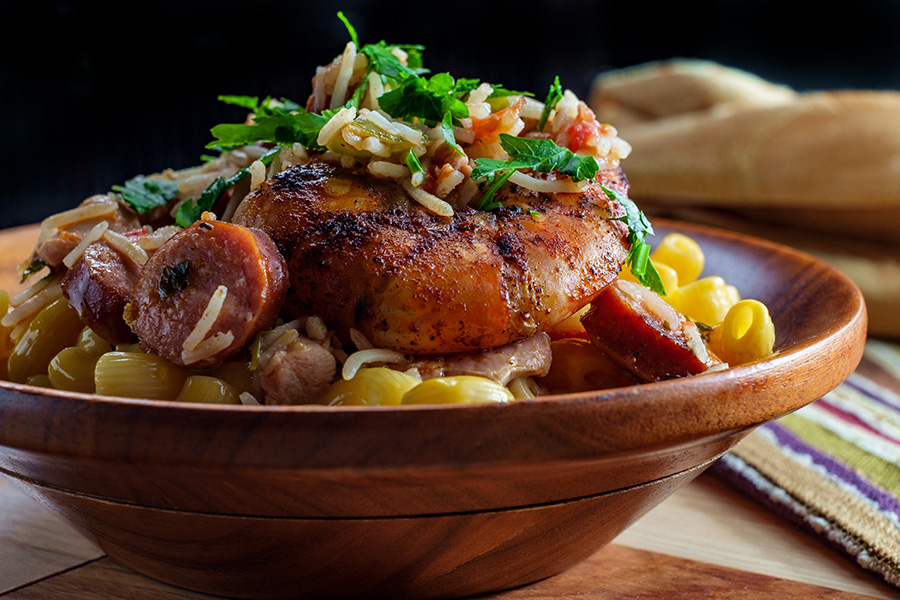
Sometimes, though, it’s nice to have them. It’s possible to freshly grind flour to use in bread or wraps. I know it’s a lot of work. One thing they had a lot more of back then was help – they had cooks to do the work for them. It’s not easy as moms to do all these things, so I think it’s about finding the balance. Have whole potatoes sometimes instead of wraps. Just see what small changes you can make. Try not to use too many store-bought things made with refined flour and sugar because those are the worst kind.
Also, we have less raw dairy these days. Back then they had dairies on their little estates, and they had raw milk and cheese. Cheese is amazing and we often don’t eat enough of it. It’s good for your teeth. It’s a good thing to have at the end of a meal or the end of the day before bed. I even sometimes eat some cheese during the night. It helps when I can’t sleep, and it’s not something you have to brush your teeth after because it’s got good bacteria. Cheese is also good after a meal as it helps with your digestion. Instead of hurrying up from the table, sit at the table longer and enjoy a cheese course and some good conversation. It really helps your body with digesting your food, and it’s also delicious.
There’s something about the slowness of mealtimes that we’ve really lost as well.
We always rush and try to finish as quickly as possible because there’s so much going on. We should learn to sit and enjoy the meal together, to notice our food and really taste it, smell it, enjoy it, and to have that fellowship time. It’s so good for our bodies and for digestion, and it helps our nervous system to feel safe and to go into rest-and-digest mode instead of survival mode from the day of stress.
We’ve lost the ability to make meals meaningful, special, and slow. There are many good reasons to do that, so it’s something that we really can work on. Play some nice soft music during the meal to help you relax. Having soft lighting and a pretty table, and maybe dividing your meals into courses like I mentioned in a previous episode, really helps us to relax. I find that usually about halfway through the meal, I start to relax and the conversation starts to flow as everybody enjoys being at the table when I’m not rushed and I’m not leaping up every few minutes. That’s always a work in progress for me.
It’s really important to be intentional about what we eat – planning what to eat as a family, how to get the good stuff, and then planning how to have the meals so that we can slow down, enjoy them, and gain the most nutrition possible from them. I hope that you’re inspired and that you have a good week of cooking. If you’re feeling overwhelmed with your cooking, just choose one thing that you can improve or change this week.
Don’t put too much pressure on yourself. Maybe replace one meal that’s not very healthy with a good stew or soup. Stews in the crockpot are so easy to make. My favorite is lamb stew, but you can use whatever stew meat you can find, preferably on the bone. Don’t worry about browning it – all you need to do is season it. Add some salt and pepper, some thyme, and maybe rosemary.
Put the meat in the crockpot, and then add some broth, either homemade or bought broth, chicken or beef, depending on your meat. Put about half an inch of that in the crockpot, and then add some chopped carrots and potatoes, as well as some more salt, and then put the lid on and cook it. I like to start it off on high for about an hour to get it going, and then I do five to six hours on low after that. You’ll get a lovely tender stew. All you need to do is stir it once in the middle, but generally don’t open it, and your dinner will be ready in no time.
Just try one thing to help improve the health of your family. You’re doing great, moms! You’re doing amazing stuff, and you deserve to be encouraged and to know that it’s not easy, but you’re not alone.