
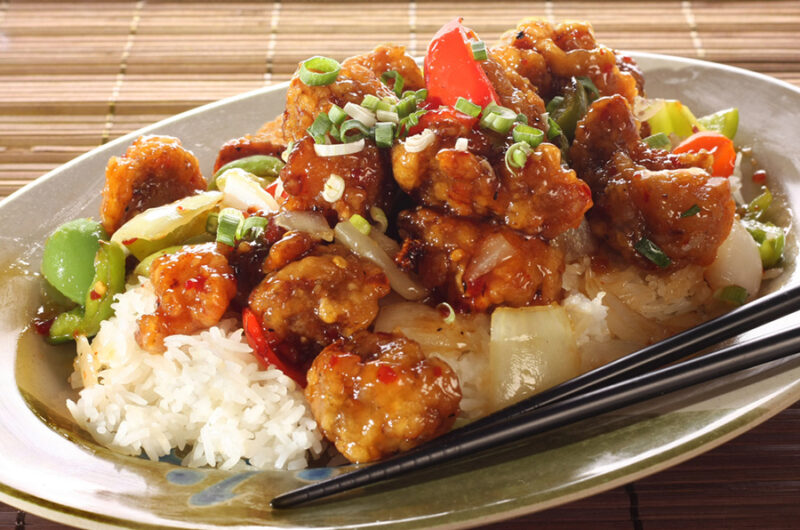
Today we’re going to be talking about chef Rachel Ray. You may have seen her on the Food Network. She loves to do all her cooking from home. You can look her up on YouTube – she’s lots of fun. She’s very much about taking things like fast food, or anything that you enjoy, like Chinese food takeout, and then recreating it at home using simple techniques. She makes a lot of comfort food. We’re going to mention some things that we can learn from her as a chef, and then we’ll talk about some particular meals she makes, and what she does to make them her signature food. So, let’s get started.
Rachel Ray is not about perfection or fancy techniques. She’s about getting real food on the table and enjoying it. She helps us know how to think about food and about cooking. So, point number one of what she teaches about cooking is speed without stress. She has some fifteen minute meals and thirty minute meals. “Speed without stress” is about the way you sequence it. Chop everything first, start with what takes longest, and clean as you go. Organization counts.
Number two – cook by instinct – don’t fear. She hardly ever measures anything precisely. She’ll dump some of each thing in, and say “about a tablespoon” or ‘a shake of salt” or some other flavoring. She says that you should taste the food constantly and then adjust it. Figure out what tastes good, and don’t worry as much about measuring. Trust your senses, and your confidence will grow as you practice this and you learn what tastes good to you; what you like.
Number three – she says that it’s important to master basic techniques – simple techniques. You should learn how to saute, and how to deglaze a pan whenever you’ve been cooking something delicious. That way you can get that flavor off the bottom of the pan and add that liquid to the rest of the food. Learn about layering your flavors. Start with onions, add garlic, spices, and a good liquid. Those techniques will really build flavor and make the food taste good.
Number four – use one pan, or minimal dishes, as then there’s minimal cleanup. Cook with simple methods in mind – things like using a skillet on the stove to cook your meal. Maybe cook your mince or bolognese sauce, and then add your pasta or noodles and mix those in. You could cook in the oven on a sheet pan. Cook your vegetables and your meat at the same time, all laid out on the pan.
You could use a Dutch oven, which is like a cast iron pot. You could cook a stew in that. Everything gets done in the one dish, so there are fewer dishes to wash. Somehow, it feels easier when you’ve just got to do one big dish of something. You can use the crockpot as well instead of the Dutch oven. That’s also a great way to use just one big dish. Today, I’m planning to cook up some beef shin and some pork ribs in the crockpot. Those are so quick and easy to put in.
Number five – flavor comes first. Don’t try to skimp on flavor because you want diet food or something, but choose bold flavors so that you don’t need excess fat or sugar. Have food that tastes good – lots of vegetables, meat that’s been seared in the pan for good flavor.
Number six – learn from different cultures. Rachel Ray loves Italian, Mexican, Asian, and Mediterranean cuisines. She loves to borrow from those different cuisines. You can adapt them to what’s easy for you to make, and I think focusing on a specific type of cuisine can make your cooking easier. You can be thinking, okay, tonight I want to make Asian food. I’m going to use some soy sauce, some noodles, finely chopped beef or chicken, and some bok choy. Be creative. Go and look on YouTube for recipes. Look up Rachel Ray Asian recipes, and then try those at home. Do the same for Mexican food, et cetera.
Rachel Ray is very big on having a well-stocked pantry so that when you want to make a certain style of fast food, you can easily do that. We’re talking about all the extras – stock up flavor and not recipes. Choose ingredients that work across various cuisines, and that make takeout-style food at home feel fun, not fussy.
Here’s Rachel Ray’s core toolkit of flavor; her flavor toolkit that works for everything. These items are necessary. There’s olive oil, salt, black pepper, fresh garlic, onion and shallots, chicken stock that’s boxed or concentrated in your pantry, butter in the fridge, and lemons and limes for juice and zest. You also need some kind of hot sauce or chili flakes. Tomato paste is nice in a tube – then you can just keep it in the fridge and use it when you want to.
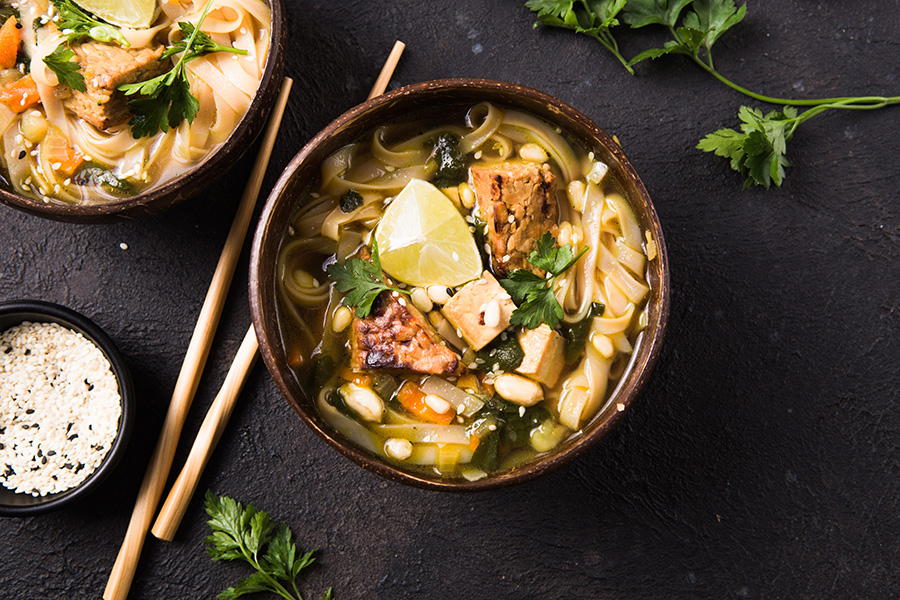
Then specifically for Chinese food, you need things like soy sauce, sesame oil, rice vinegar, hoisin sauce, corn starch, and honey. You could have some oyster sauce, five spice powder, and some rice noodles. Then all you need when you want to make the meal is the chicken or the beef. You can make stir-fried rice, beef and broccoli, orange chicken, and et cetera.
For a Japanese-inspired pantry, you would need soy sauce or tamari, rice vinegar, sesame oil, miso paste, perhaps breadcrumbs, wasabi, and ginger paste. You can make teriyaki sauce to go with something like salmon. You make miso soup or a noodle bowl. This is really helpful, I think, because having all these ingredients ready means it’s so much easier to cook foreign cuisines or ones that are to what you would usually make.
For Mexican takeout-style food, you should have some canned black beans or pinto beans, and some canned diced tomatoes. You can have ground cumin, chili powder, smoked paprika, some tortillas – corn or flour tortillas, perhaps in your freezer. You could have Mexican oregano enchilada sauce, or premixed enchilada seasoning. You could premix your own if you want. You should have pickled peppers like jalapenos. With these things you have in your, you can make tacos, nachos, enchiladas, burritos, chili, or quesadillas.
For Italian takeout-style food, you could have various kinds of dried pasta.
The paler the pasta, the better quality it is and the better it tastes. You could have some linguini, spaghetti, tagliatelle, penne, fusilli, or whatever you like to have. Then you need some canned crushed tomatoes or tomato puree, and some tomato paste. You need some olive oil, garlic, maybe red pepper flakes, peppers, and parmesan or pecorino cheese. If you like, you could have anchovy paste and capers. Balsamic vinegar is great for adding flavor. You can make your pasta with chicken or veg. You could even have some basil pesto in your freezer. You could make meatballs, chicken parmesan, and pizza. Often few ingredients equals food with better flavor and that’s easier to cook.
Here are some Thai inspired pantry items. You should have some red or green curry paste, coconut milk or coconut cream in tins, fish sauce, brown sugar, limes or lime juice, peanut butter, chili paste, and ginger are nice to have for this. You can make curry, you can make peanut style noodles, coconut soup, or stir fry.
For an Indian-style pantry, you should have some garam masala, ground cumin, coriander, fresh or ground turmeric, some cans of chickpeas, cans of tomato, curry powder, ginger paste, and then some coconut milk and cream. You could make a quick curry, or spiced lentils, masala chicken, or a rice bowl.
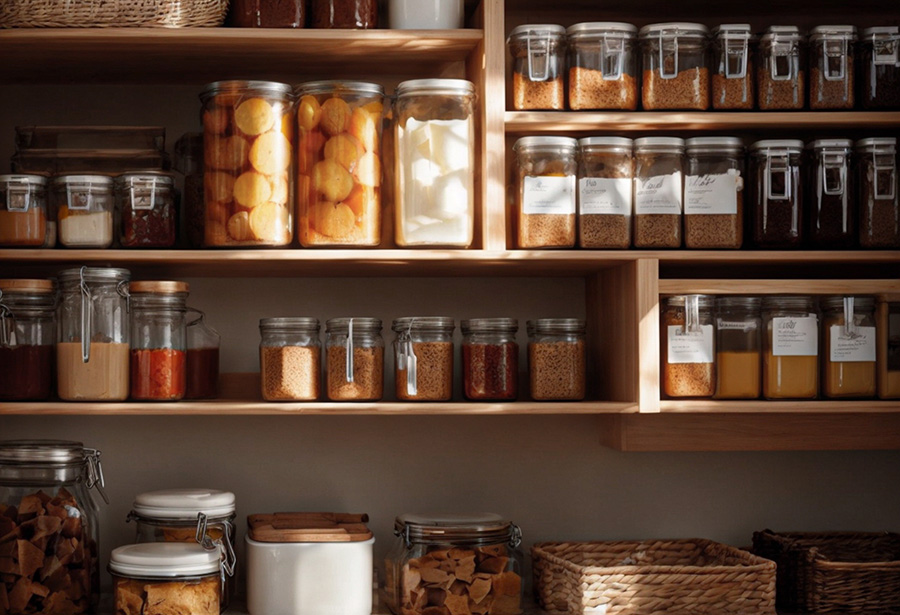
And then here are some Mediterranean and Middle Eastern takeout-style items. Have some chickpeas, some tahini in a jar, some olive oil, lemon juice, ground cumin, perhaps some za’atar, harissa, and molasses. With these, you can do hummus bowls, shawarma style chicken, and roasted veg plates.
Here are a few more things we can learn from Rachel Ray about meals and dining. A meal doesn’t have to be fancy to matter. What makes it special isn’t just presentation or even price, but the fact that you showed up and you cared enough to cook for people. Eating together beats eating perfectly. She prioritizes getting food on the table while it’s hot and enjoying it together, even if there’s mismatched plates or a casual table. The win is sharing that time, not being a flawless hostess.
She says that home cooked food is about caring, not control. You don’t need strict rules for your food, and you don’t need to worry about diets or culinary performance. It’s just cooking. Enjoy it! She says that speed and ease protect joy. If you watch her cook, she works very fast and she doesn’t worry about measuring things. She says that by keeping meals simple and fast, you remove the stress that kills the enjoyment. If cooking exhausts you, you won’t want to be dining together, so make it easy enough that it stays fun.
Food should feel abundant, not restrictive, so that there’s plenty of food, there’s seconds if you’d like, and leftovers are expected. The abundance creates comfort. Conversation matters more than courses. People should be talking, laughing, and staying at the table because they want to be together.
You can enjoy food without feeling guilty. Food is pleasure, nourishment, and comfort all at once. You never have to apologize for enjoying it. Dining is part of everyday life. It’s not a performance. Meals should be woven into your daily routine instead of being a big event that you have to prepare for.
Here are some classic Rachel Ray-style meals and some foundational cooking skills that you can learn from making them, skills that you can reuse forever. There’s skillet chicken with lemon, garlic, and herbs. This is chicken that’s pan-seared in a skillet until it’s golden, and then finished with lemon juice, butter, and fresh herbs. It’s important to learn how to pan-sear your chicken well. Have a hot pan first, add oil second, and protein last. Don’t move it until it releases from the pan.
You can build a pan sauce using the brown bits by deglazing the pan with lemon juice, wine, or stock. Balancing your fat and your acid is also important. Butter adds richness, and the lemon wakes everything up. You can use the same technique with fish, pork, mushrooms, or anything really.
You can make a one-pot sausage, peppers, and pasta meal. This is Italian sausage with onions, bell peppers, garlic, tomatoes, and pasta, all cooked together. This teaches you flavor layering. Brown your sausage first for a good flavor, and then remove it. Cook your vegetables in the fat from the pan with the sausage bits. Add your garlic last so that it doesn’t burn. Cook your pasta in sauce in this case. That way, the pasta absorbs flavor because it’s not just in water. Learn what goes in early and what goes in late. One pot cooking maximizes flavor and makes minimal cleanup, of course.
Number three is a quick beef stir-fry with ginger and soy. This is thinly sliced beef and crisp vegetables with a savory sauce over rice. This teaches you high-heat cooking of meats. Your pan must be hot, and you don’t want to overfill it; cook in batches. Otherwise, it’ll get watery and it won’t brown nicely. This also teaches you prepping before cooking – everything needs to be chopped and ready to go because everything happens fast once you start cooking.
It also teaches you about sauces thickening . You add the salty soy sauce, something sweet – the honey, something acidic – the rice vinegar, and then some heat – the chili. Once you understand how to make the sauce with those four – salty, sweet, acidic, and hot, then you can invent stir-frys from whatever’s in your fridge.
Then let’s talk about a speedy beef chili. This deeply flavored chili that can be made in under 40 minutes is very Rachel Ray. This teaches you about blooming your spices – toasting them a little in oil before adding liquid, about building depth when you’re cooking – add your tomato paste, your stock, layer your spices, and et cetera, and about texture control. You mash some of the beans to thicken the chili naturally, but leave some whole. It can taste like it’s simmered most of the day when it’s actually been under an hour.
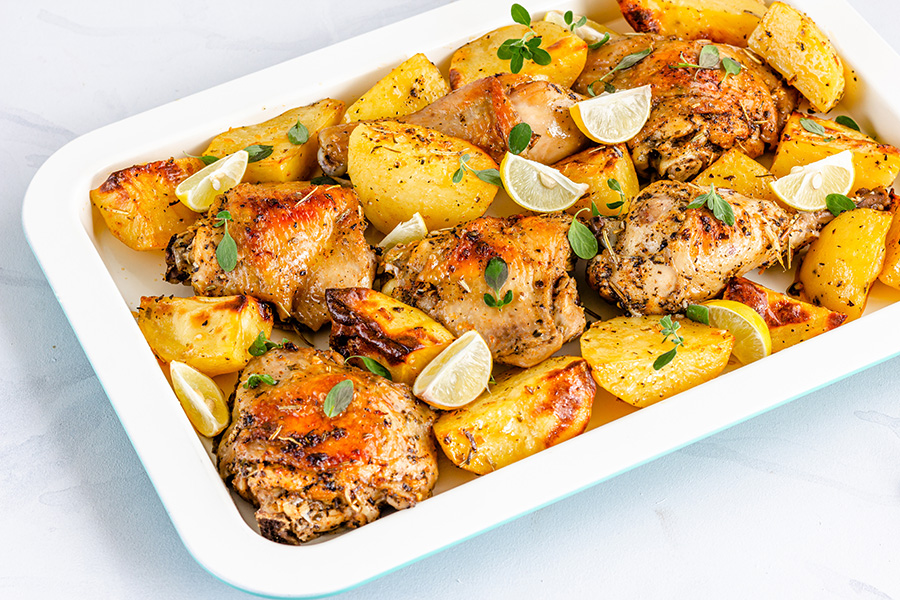
Then lastly, there’s sheet pan fish like roasted salmon with vegetables and a lemony yogurt or sour cream sauce. This teaches you about the timing of using a sheet pan. The veg takes longer, so that goes in first, and then you add the fish near the end. The fish will take about ten minutes. Then you season generously, using your oil and salt before you roast it, and then you make a finishing sauce. Cool creamy sauces balance the roasted foods.
You can do this with endless varieties of vegetables, meat, or fish. It’s great to experiment with. You want to add your hardest vegetables first, and then softer ones like broccoli or Brussels sprouts next. Then you add your protein, like fish. Chicken will need longer – about twenty minutes. Try your hand at that and look up some creamy sauces to try. You could do a Hollandaise sauce, or you could do a cold sauce like tzatziki or tartar sauce – whatever sounds good.
In all these meals, you’re learning what sequence to cook them in, how to layer your flavor, how to experiment, and to not be afraid to improvise once you know the basics. For Rachel Ray, to get the true experience, cook fast.
Don’t overthink or over measure, and taste as you go. Use olive oil generously, and don’t stress even if it’s messy. It’s supposed to be.
I hope you’re feeling inspired and have a few ideas to try. I’m keen to build up the pantries for the different styles of food, because that means I’ll cook them more often, and bring some variety. Then I don’t have to source all those things at the time, as I’ll have them in the pantry. Happy cooking!


