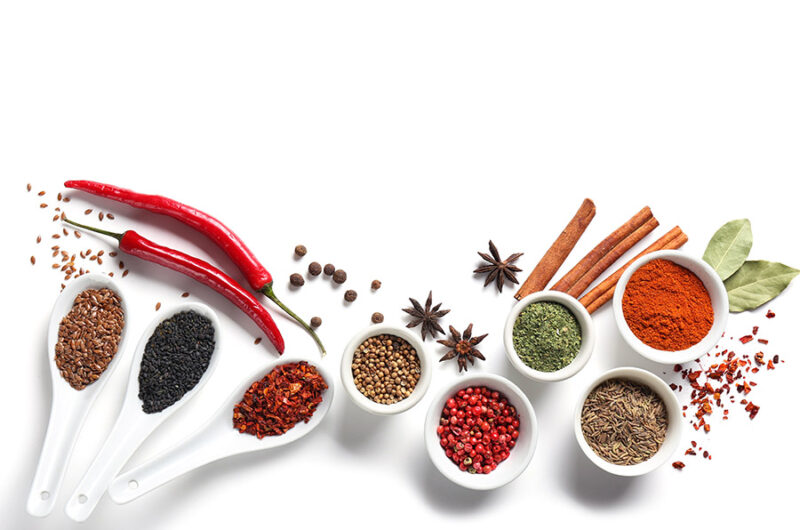
Last week, we spoke about how to season your food amazingly, using spices and herbs, acid and citrus, and any other flavors that you can add to make it delicious. Today, we’re going to do a spices and herbs guide – a guide to which herbs and spices are good, which ones are best to have in your kitchen, and what to do with them. We’ll also talk about which ones to use on which proteins, vegetables, or whatever else you’re cooking. It’s obviously a big subject, and I’m just going to touch on it briefly, but hopefully this will be a basic guide for you as a learning cook that can help you know what kind of herbs you can use.
A Word about Fresh Herbs
It’s really lovely to have fresh herbs in your kitchen. If you have a kitchen with space where you can sustain the herbs, or you have a balcony or patio, then you can have some herb plants. Just outside your kitchen door is another good space to grow plants. Fresh herbs are always going to taste better than dried ones, but dried ones are good too. Sometimes you’re in a hurry, or that particular plant is not growing well. Whatever the issue might be, it’s great to have dried herbs too.
We’ve got a large rosemary bush, but that’s about all right now. I think thyme is quite easy to grow, and we’ve done basil at times. That one’s a little temperamental, though. It does better in the summer, but not with too much sun. Also, it can easily go to seed if you don’t keep trimming it. You can often get a small plant from the grocery store, like basil or thyme, and keep that in your kitchen.
The equivalent of that for spices is that you can sometimes buy whole spices. You can buy a piece of ginger, and sometimes a piece of turmeric, or you can use the dried spices. As I said in the previous episode about seasoning, it’s good to toast your spices a little bit before using them. I also talked about when during the cooking process it’s best to use dried herbs and fresh herbs – you should use dried herbs near the beginning, and fresh herbs at the end.
The Four Core Spices
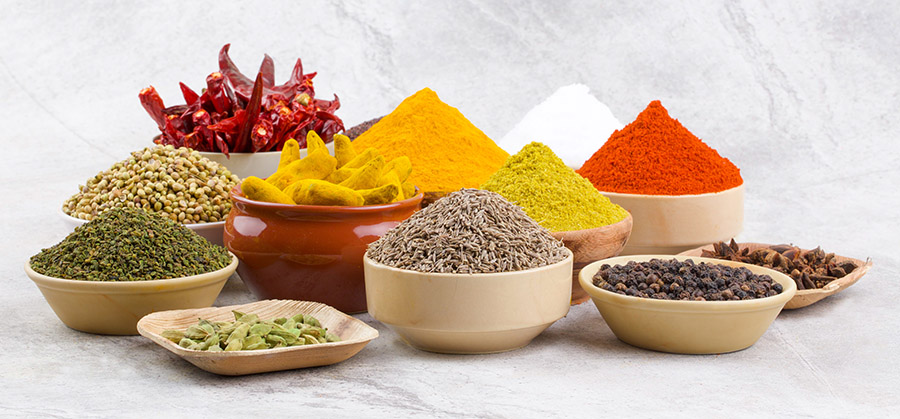
Let’s get into a guide to herbs and spices in your kitchen and what to use them for. Firstly, there are four core spices – spices that you’re going to use almost daily in your cooking. Those are black pepper, garlic powder, onion powder, and paprika. You also get smoked paprika, which has a deeper, smokier flavor, and they’re both amazing.
Black pepper is going to be good on most dishes. You need to be careful sometimes, though. For example, if you’re cooking chicken breasts in the oven, and you crack some black pepper on top, then sometimes people can get a big piece of pepper in their mouths, and that’s not pleasant. However, if you add a little bit evenly, that works great. It adds heat and depth to almost any savory dish that you’re making.
If you’re going to be browning a leg of lamb to use in the crockpot, add some pepper. If you’re going to be cooking a filet steak, add some pepper with your salt. Obviously, pepper doesn’t generally burn. I find that you can add it before you brown food, and obviously everything can be added to food before you put it in the crockpot or the oven. Often, it helps to add it a little bit in advance so that it’s got time to infuse the food with flavor, especially if it’s a big piece of meat.
Then there’s garlic powder. I don’t use this as much as I prefer fresh garlic, but it’s always helpful to have dried garlic powder in your pantry. Again, you can sprinkle this lightly on meat, and use it in marinades and sauces. It doesn’t work as well on vegetables, though – it’s best to mix those with fresh garlic, but it’s great for meat.
If you’re doing roast chicken, leg of lamb, or steak, you could add garlic powder and onion powder, or just one of the two. I prefer onion powder. It does get a bit clumped up, though, if you leave it out or if you shake it over a steamy pot. We’ve found that what works best is having a little Ziploc plastic bag of it in the drawer. We’ve tried having it in a jar on the counter, but that still gets clumped up easily. A glass jar of onion powder can work, but then it’s best to use a spoon to scoop it out – open it or unscrew it, and scoop it out quickly. If you shake it over the steam, it’s going to get clumped very quickly.
Onion powder, like garlic powder, is great for adding to any rub or any meat. It’s great in pork rub, nacho meat, and in spice mix for nachos or tacos. It’s great to add to soup to get a little bit of oniony flavor, but you don’t need to, because you can just chop up an onion. When possible, garlic and onion powder should be used in their fresh form – fresh garlic and fresh onion are always better. The powder would be a backup. It adds a savory flavor to soups, dressings, et cetera. A bit of it can be nice in salad dressing.
Then there’s paprika or smoked paprika. That’s also great to add to a seasoning mix for nachos or tacos, along with things like cumin and chili. Paprika is great on meat and vegetables. If you want to make a red pepper and sweet potato soup, smoked paprika is amazing. It’s also great on baked potatoes or chips in the oven. You can also put a little bit of paprika in chicken, or in stews. It adds a slightly sweet and smoky flavor. That’s a great spice to have in your kitchen.
The Earthy Spices
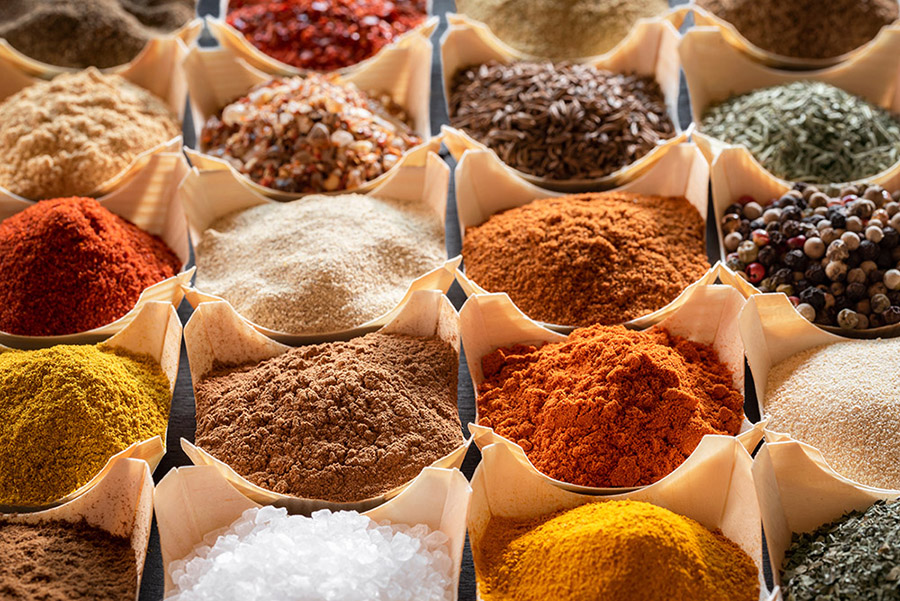
So, there’s black pepper, garlic powder, onion powder, and paprika. Then there’s the warm, earthy spices. These are for stews and other hearty dishes – there’s cumin, coriander, turmeric, cinnamon, and nutmeg. Cumin is essential when you’re cooking Mexican food, Middle Eastern food like hummus, as well as Indian cooking. We definitely use cumin in our homemade tortilla and taco nacho mix. We also use it on chickpeas or in hummus if it’s homemade. Cumin goes great with anything involving chickpeas.
Then there’s coriander – obviously we’re talking about ground coriander seeds, not the leaves. You get the herb coriander as well, and that brings a citrusy warmth. It actually goes great with cumin as well. If you add cumin to something, you can add a little bit of coriander too.
Turmeric is a very earthy spice, and it’s often used in curries. It’s that yellow powder that’s supposed to be anti-inflammatory. It’s used in rice or rice dishes, things like bobotie and soups, and especially in curries. It’s great for that.
Then there’s cinnamon. This is a very different spice to the others. It’s got a sweetness to it, so it works well with sweet items. As you know, you can put cinnamon on pancakes, in your oats porridge in the morning, or in cinnamon rolls. All those things are delicious with cinnamon. It’s also very good for lowering blood sugar, and it’s good for blood pressure, et cetera. Cinnamon is often used in baking, but it’s also excellent in stews and Middle Eastern dishes. You can experiment with it.
Nutmeg is a fifth spice in the warm and earthy category. We don’t use it very often, but when we do, it is so perfect. It’s a perfect match for mushrooms, and for cheese sauces or cheese fondue. Those are the two times I use it. You want to sprinkle it very lightly on your mushrooms before you cook them. Add a bit of onion powder and salt, and that makes them really delicious. It brings out the flavor. In cheese fondue or cheese sauce, add a little nutmeg at the end to bring that little bit of kick. It brings a warm, spicy flavor to whatever you’re adding it to.
Hot and Bold Spices
Then there are the spices that bring heat and bold flavor. One is chili powder. It’s a bit milder than cane pepper, and it’s great for chili carne and for tacos. You use it in Mexican spice mix – I’ll put a recipe for a great Mexican spice mix at the bottom because I’ve mentioned it a few times. You can use it for nachos, tacos, enchiladas, et cetera. It’s great to have in your pantry. So, chili powder adds that spice. You can add it to chicken, fish, stews, and sometimes to vegetables or soups. You can just do it by taste – that works great
Chili flakes provide quicker heat. It’s dried chilies that aren’t ground up into powder. It works great to add to pasta, and even on pizza. You can put it in stir fries, and even in your scrambled eggs in the morning. Cayenne pepper is very spicy, so you need to use it sparingly, but it works well to boost heat in your stews and soups. Smoked paprika could also go in this category because it has that deep, smoky flavor. You can add to your meat, and as I said before, to roasting vegetables, to soups, to spice mix, et cetera. We use smoked paprika far more than actual paprika because it’s got such a great flavor.
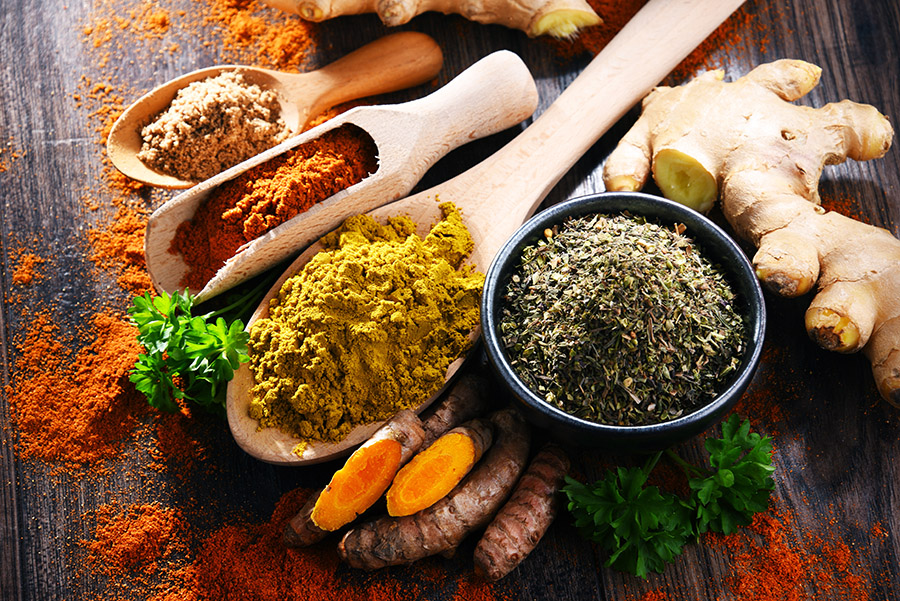
Here are some other bold flavored spices – curry powder is obviously used for curries, as well as lentil dishes, often in Indian food. Garam masala is also a warming Indian spice blend, to be used at the end of cooking. Ground ginger is used a lot in Asian cooking and in marinades. Chinese five-spice is a sweet and savory, very aromatic spice, and it’s perfect for pork and stir fries. These are all very helpful spices.
Four Staple Herbs Plus One Bonus
Now let’s look at some herbs. The four herbs that I use most often are oregano, thyme, rosemary, and basil. These are Mediterranean herb staples. I use oregano the most often – we put it on everything. We put it on potatoes or potato chips, we put it on pizza, in tomato sauces, on meat like chicken for Greek dishes. We add it to a lot of things.
Thyme is great for meat. It’s the number one herb that you should add to all your meat dishes. I add it to leg of lamb, to chicken, whether it’s roast chicken or chicken in the oven. I add it to fish, soups, and stews. It can go in everything, just in moderation. Fresh thyme works really well. You can have a thyme plant, or you can buy a box of it from the grocery store. Then you can add a few sticks of thyme on top of your meat or vegetables as you cook them. That infuses a great flavor, and then you can just remove them afterwards. You can also just use your fingers to gently slide all the leaves off the thymestem, and leave those on your meat or on your vegetables. So, thyme is amazing for bringing out the flavor of meat.
Rosemary is wonderful with potatoes, lamb, and roasted vegetables. You can make great roast potatoes by tossing them in salt, rosemary, and a bit of butter. You can put rosemary on your roast lamb or chicken, and sometimes on roasted vegetables as well.
Basil is very much used in Italian cooking. It goes well with tomato sauces, pastas, and bolognese sauce, and you can put it on top of pizza. You’d add dried basil at the beginning of the cooking process, but you can put fresh basil onto pizza at the end, or in a pasta sauce, especially bolognese. Basil goes very well with tomatoes and garlic. The three go together – they grow together great in your garden because the basil and the garlic keep the pests off the tomatoes, and they also work great together in cooking. Most pasta dishes are going to be great if you have a bit of tomato, a bit of basil, and a bit of garlic.
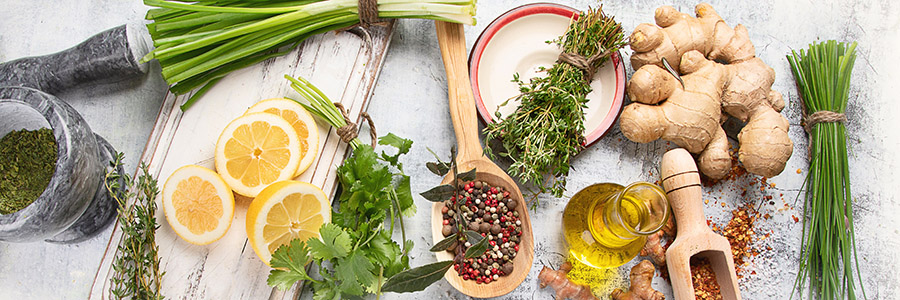
So, use basil as a way to enhance flavor at the end of cooking. If you have your bolognese, and you’ve cooked it up with tomato sauce, then a little bit of garlic and fresh basil at the end mixed into that sauce really elevates it. It’s fabulous! Try to use dried and fresh basil in your kitchen – that’s a great plant to have if you can.
One more herb that I can’t forget is bay leaves. Bay leaves are fantastic to add to any dish that you’re doing in the crockpot, or to a meat on the stove like bolognese. Putting a bay leaf or two in there is really going to enhance your flavor. It works great to add bay leaves to any meat dish, and also to broth or stock that you’re cooking. Dried bay leaves are really a good kitchen staple.
Bringing the Flavors Together
So, if you taste your food, whatever you’re cooking and it tastes a little bit bland, whether it’s chicken, a bolognese dish or anything, these five flavors are the top ones to choose from – paprika or smoked paprika, garlic powder or onion powder, oregano, chili, and sometimes basil if it works. Those are the five that you could start with in your kitchen – oregano, chili, garlic or onion powder, though we generally use onion, paprika or smoked paprika, and basil.
Have a look in your spice aisle. We try to get non-irradiated spices and organic herbs from the health food store. Go and have a look at the aisles that have spices and herbs in them, and see what appeals to you. See what kind of cooking you’re going to do, and think about what you’d like to get. If you generally do basic meat like chicken and lamb, then what I’ve mentioned is great. If you do a lot of Chinese or Asian cooking, then maybe you’d want Chinese five spice, cumin, ginger, and et cetera. If you do a lot of Mexican cooking, you can use the recipe below for the spice mix. You’d use things like smoked paprika and chili. If you’re British, you won’t use a lot of spices at all, but maybe some herbs.
Do whatever works for your style of cooking, and enjoy experimenting with the flavors. Start with salt, and then try smelling what herbs and spices you have, seeing how they seem to you, and what you think would work with that dish. Then add a little, and see how it enhances the food. The flavor always comes by experimentation and practice.
So, I hope you have fun with spices and herbs, and I hope you get to grow some in your kitchen too. That’s always a lovely aroma to have. When you walk into your kitchen and smell your thyme or basil plant, it makes you want to cook.
MEXICON FOOD SEASONING MIX
Ingredients: