Lately we’ve been thinking about the best ways to help our health. Some of our family have had a bit of eczema, and some other less obvious symptoms. I was looking at an Instagram reel about the healthiest food on the planet for people. It said it was human breast milk, obviously for when people are babies. Then the things that mirror that the most in terms of their benefits and nutrients, et cetera, are fermented foods. We’ve always had yogurt, sometimes raw yogurt. We have raw milk, we love aged cheese, and we also get lacto-fermented pickles and sauerkraut at the whole food store.
However, I wanted to look into making those things at home, as then they’d be cheaper, and I want to finally get over my fear of making them. I think my fear of making these things comes from worrying about the bad bacteria. We’ve also obviously made sourdough bread, like most people during COVID, and also before that, but it was never something that seemed dangerous because you cook it. Fermented foods, though, are on the counter for three days. They have a lid on, but any bacteria could get in. It just felt a little harder, and a little more dangerous and scary, but I decided to finally take the plunge. A couple of my friends do this, so I felt like it was time.
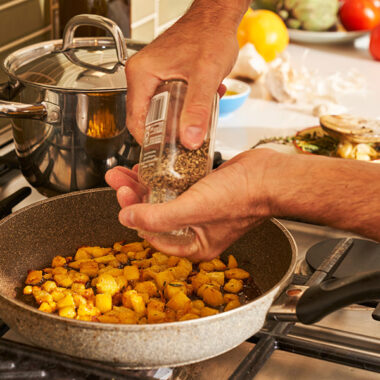
So, what we started with was pickles, as they seemed very easy. We got some baby cucumbers, and then sterilized a jar in the dishwasher, although we use natural soap, not normal dishwasher soap. Then I got some dried dill – I couldn’t find fresh dill – and some mustard seeds, and we just put the pickles in the jar. We made brine with about two or three tablespoons Himalayan salt in filtered water. After mixing that up, we added the herbs and spices to the jar, and then poured it over the pickles, leaving about an inch at the top. We covered it tightly and put it on the counter.
I didn’t have any kind of starter – you don’t necessarily need one – but I did add a few pieces of sauerkraut that we already had in the fridge. It felt like that would help get the fermentation process going, and Google confirmed that. We had that jar sitting on the counter for three days. I opened it once a day to just let out any excess gas, but there didn’t seem to be any.
I read somewhere that I needed to do that, rather than have a loose lid on top of the jar but some of these things may not be the correct way to do it. If so, please let me know! My email is karyn@familyfoodformoms.com. I’d love to hear from you!
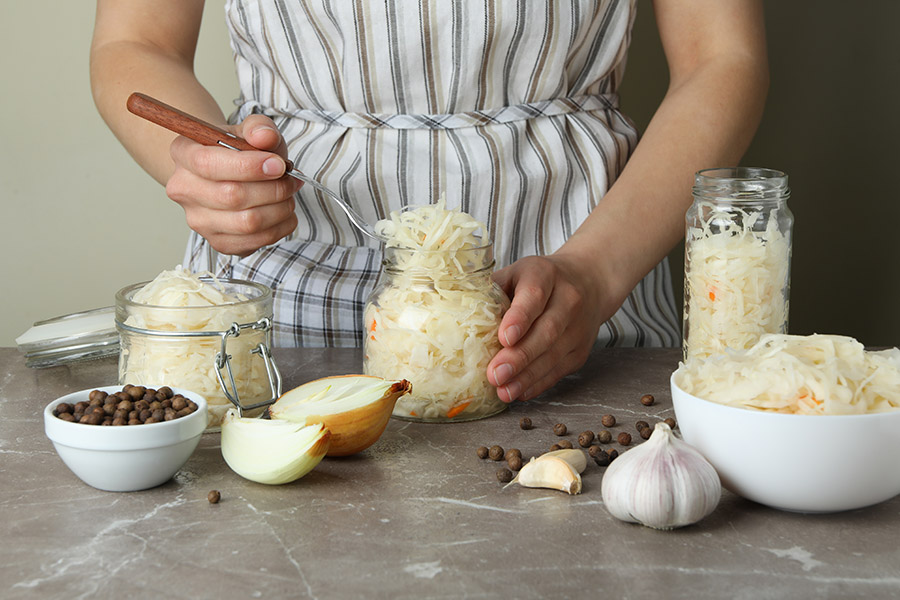
The pickles seem to be doing well. There were a few bubbles and some fizziness towards the end, and now they’re in the fridge. We’re gonna taste them – I’ll let you know how they are. I’ll eventually try sauerkraut as well, though that’s a bit more labor intensive with grating the cabbage.
We’re also going to try making milk kefir. At this point in time, we’re still buying milk kefir from a health food store, but it’s pretty easy. I’ve ordered the kefir grains. Basically, you just put the grains in milk, and then leave them to ferment. I’m not sure yet if you have to heat the milk – I’ll have to research that.
We’ve also tried making yoghurt for the first time. I ordered a little yogurt maker that makes a liter at a time in little glass jars. It basically keeps it at the temperature of about 100 degrees Fahrenheit, 40 degrees Celcius, for 36 hours. It’s been really easy. You can either use milk and cream, or just milk. I like to use raw milk. You heat it, then you add your culture, and et cetera. It’s really easy, and it’s really beneficial.

We’re making the Lactobacillus reuteri yoghurt (l-reuteri). We have some bacteria capsules for that. You use the capsules with the bacteria as your starter, and then you also add some sort of prebiotic powder; prebiotic fiber, which you’ll get in any kind of yogurt making kit. You add the prebiotic and the bacteria to the milk. You basically open the capsules and tip in the contents of a couple of those, depending on how much you’re making. It’s about two capsules for one liter of milk or cream.
Then you mix that up well, and then put it into the yogurt jars, which have also been sterilized. After that, you turn on the yoghurt maker and leave it for 36 hours. Then you put it in the fridge for a few hours to finish fermenting, and to come to a nice texture and thickness.
We’re going to taste that as well soon – I’ve mixed one of the containers up and looked at it, but I haven’t tasted it yet. It smells a little bit like cottage cheese. This is a very strong yogurt, by the way. I know that you can use some of it, about a third of a cup, to make your next batch. You can do that three or four times before you should use new bacteria from the capsule again.
What I plan to do the first time we eat it, as we’re not all that good with sour foods, is to make a smoothie using the yogurt with berries and honey. I know that cottage cheese works well in this context, so I’m sure the yogurt will taste great. We’ll add some frozen blueberries or raspberries and some honey, and then we’ll taste that and see how it turns out. We could also add it to some other yogurt that isn’t as strong – mix them together and add a bit of honey and or granola. We’re going to try that out and see how it works.
One of the challenges is that I want to use raw milk, and I only order that once a week, so that makes it harder to make enough yogurt. I’ll possibly experiment with milk that’s been frozen and defrosted, and see if the yogurt works just as effectively then. That would be great because then I could make it a few times a week instead of just once.
So, what you do to make it is mix up the milk and the cream. You need a thermometer of some kind. Heat it to 85 Celsius; 180 Fahrenheit, more or less. The instructions are always with your yogurt starter kit. Let it cool, then add the prebiotic, and then the probiotic. Mix that up, and put it in the jars. Then you need to leave it for 36 hours at about 40 degrees Celcius; 100 Fahrenheit. After that, you just take the jars and put them in the fridge. When they’ve been there for a bit, you mix them up and then see how they look. You may want to drain the whey a little bit with a cheesecloth. If it’s too thin, you can use it as drinking yogurt. Add some flavor or blend it up with some strawberries or other berries and honey, like I mentioned.
So, it’s really easy to make. The whey is really good too, and really high in probiotics. You can keep it and use it in smoothies, et cetera. I’m really excited about this yogurt, especially because it’s supposed to be very high in probiotics. We often don’t have the l-reuteri in our guts – it’s a rare thing that we’re often missing these days because of antibiotics, cesarean births, and all kinds of things that have basically made it die out. Using this particular strain of probiotics makes stronger yogurt than usual, but it’s very good for the gut. We’re excited to see if we can cope with it. We’re going to start eating it slowly so that it’s not a huge shock to the system, and then build it up.
I’ll update you on how the other things we’re trying are going – the pickles and the kefir. Also, we’ve been making bone broth twice a week. We have a lamb leg roast and a chicken roast, and then we make broth immediately after we take them out of the crockpot. We just put the bones back in the crockpot with a little meat and cartilage, and then we add the usual – one or two capfuls of apple cider vinegar to help draw the nutrients out of the bones, a bit of salt, some bay leaves, some carrot, onion, and maybe some celery. A tomato also works well.
Then we top it up with water and leave it for about 24 hours. That makes great bone broth. We don’t put it in jars – that’s too much fuss, so we put it in a big flat glass container with a plastic lid in the fridge. Then we use a lale to scoop out what we need.
I make soup with it a few times a week. We make cauliflower and cheese soup, broccoli and potato soup, and butternut and sweet potato soup. All of those are very simple. I think I’ve mentioned before that they’re basically bone broth, water, vegetables, salt, and pepper if you like. Then you just blend it up with cream, coconut cream, cheese and cream, or just the water. Blend it up, and it makes a delicious appetizer or side for a meal.
We find that it’s much healthier and easier than having vegetables every meal. Instead of having stir fry vegetables, which are not bad, we’ll just have a course with the soup before the rest of the meal. The body digests it so well. The bone broth is so good for the gut, and the vegetables are soft and well cooked, so they’re very healthy. I really find this one of the healthiest vegetable parts of a meal.
So, adding these things to our general cooking has been quite a challenge to get into. It does feel like a bit of extra work, but it’s quickly settling down into not too much extra work, and I really wanted to become part of our routine.
The other thing we need to do is to actually use the stuff regularly. We always forget that we have sauerkraut in the fridge. The kids don’t let me forget about the pickles, but we sometimes forget about the kefir, et cetera. I want to figure out a routine where we have those regularly and are able to eat them. I’ll update you again soon about how it’s all going, and about those particular fermented foods – how they taste and what we’ve used them in. I hope you’re inspired. I’ve been inspired to try making them from scratch, and so far it’s going great.