Today we’re going to talk about seasoning. This is part of our series about skills that we should all learn in order to become better cooks. We’ll be talking about how to season different kinds of food, how to understand seasoning, and how to get the best results.
Last time we talked about heat control and how to make sure that you use the correct heat for whatever you’re cooking in order to get the best results. Today we’re going to talk more about seasoning – salt, spices, and herbs; understanding the role of saltiness, fat, and acidity like citrus; using herbs; using spices; and knowing how to layer your seasoning throughout your cooking time. We’ll look at how to season your proteins, vegetables, starches, soup, and sauces correctly. You’ll need to develop the skill of being able to taste food and then adjust it, knowing what needs to be added. We’ll also look at how to avoid some common seasoning mistakes.
So, what enhances flavor? The top five things are salt – that enhances your flavor, fat, which carries your flavor with it, acidity, which brightens and balances your flavor, heat or spiciness, which adds something exciting to the taste, and then aromatics, which build depth.
Firstly, let’s talk about salt. You get sea salt, table salt, Himalayan salt or mountain salt, flaky salt that you have to grind or intentionally use as flakes – there are many different kinds of salt out there. Table salt isn’t great because it’s been very refined and it’s got strange things added that are not necessarily good or useful. Sea salt is great and Himalayan salt is great – use what you like. Sea salt works well for finishing a dish. At the end of the cooking time, try to season a dish with sea salt. Whatever salt you use, try to get a feel for how salty it is so you know how much to add. I think Himalayan salt is a little saltier than sea salt.
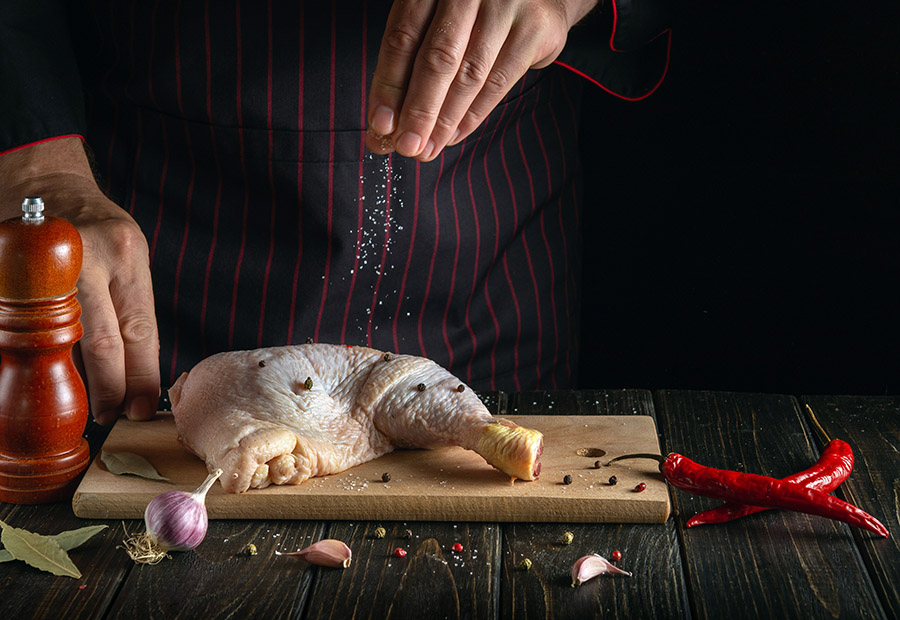
The most important thing is to salt the dish in layers. We’ve talked about that a lot. It means that when you’re first putting in your food, whether it’s meat, vegetables, or soup, you salt it first. You’d salt vegetables lightly, and meat more heavily before you cook it. That’s going to enhance the natural flavor, and it’s going to draw out the moisture. Under-salted food tastes flat.
So, you want to start salting it early on – lightly at the beginning, and then in layers as you go. You may want to add salt at each step of the cooking process, and you should definitely at the end, whether you’re blending a soup, finishing off a vegetable dish, finishing off a meat dish, etc. You have to taste it and salt it at the end as well.
Here’s a fun little exercise – take some tomato slices and try them plain, and then try them lightly salted. Notice how the water gets drawn out of them. This is helpful if you’re making a dish with sliced tomatoes to get some of the water out early. Taste them again with a tiny bit of salt, and then properly salted, and think about the difference. What do you prefer, and what works best? Let’s say you’re making a caprese salad, which is basil, tomato, and mozzarella. Mozzarella is very plain and saltless. It doesn’t taste very salty, so in that case maybe your tomato’s better with a bit more salt. You can even put a bit of salt on your mozzarella. See how the different amounts of salt work.
Things are terrible if they’re over-salted, aren’t they? You want to find the balance – the right amount of salt, but not too much. We’re definitely very liberal with salt in our house. If I’m cooking a soup, I’ll salt the vegetables beforehand and then I’ll salt the soup a bit at the end if it needs it.
However, I think it’s also important to think about ways to flavor food without salt. Salt is only the beginning – you can add a lot of flavor to your food using herbs, spices, citrus, fat, and et cetera. So, let’s talk about herbs and spices. Fresh herbs are best to add at the end of the cooking process. This would be things like fresh parsley, fresh basil, cilantro, and dill. You can add parsley to something like a chicken broth soup, and basil to a spaghetti bolognese. The bolognese sauce will really be amazingly lifted if you add a little bit of fresh basil and a little bit of fresh garlic at the end of your cooking process.
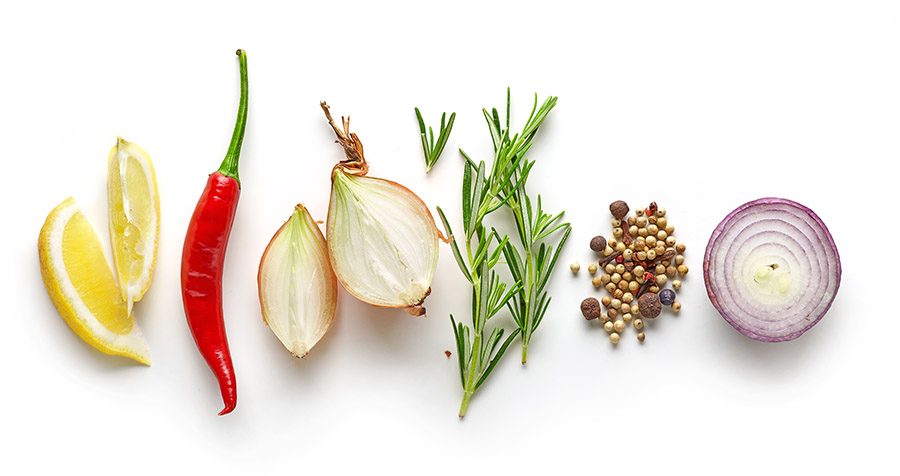
Other herbs – dried herbs and hardy herbs – can be added earlier on to bring flavor to the meal. These are things like rosemary, thyme, and oregano. You could add these to a roast leg of lamb, a stew, a soup, or anything that has vegetables. These herbs are very helpful for adding flavor. When we cook meat in the crockpots or the slow cooker, we often add quite a bit of rosemary and thyme to bring that flavor. Delicate herbs are used to finish food, and you cook the food with woody or hardy herbs.
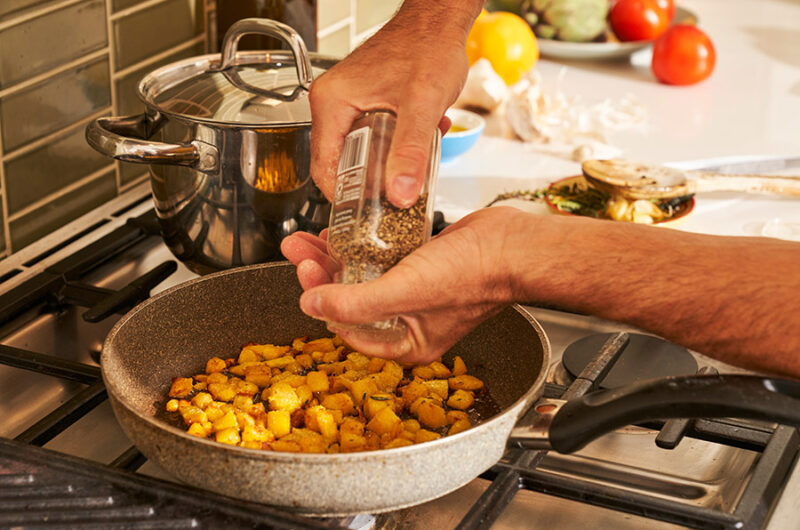
Then there are spices, I usually ground spices – things like smoked paprika, chili powder, and onion powder, though that’s not a true spice. We also use nutmeg, and sometimes turmeric. A general rule is that if you’re using ground spices, it’s nice to bloom them in oil. You could just add them to the meat or whatever you’re going to cook, as long as it’s going to cook for a while after you add them, but it does enhance the flavor a little bit if you just add them to the oil. If they’re whole spices, then you need to toast them in a dry pan a little bit to get a really good flavor. Cooking the spices briefly before using them releases that aroma.
Cumin is another spice. It goes great with chickpeas and hummus, and also with any vegetarian stew. Nutmeg is great on mushrooms – just go slow. It’s also great in cheese fondue or any kind of cheese sauce. Add a little bit of nutmeg to really bring out the flavor. Chili powder is great in stews and soups, and smoked paprika is great on sweet potato or potato, and in soups like red pepper soup. Smoked paprika is also a great element of Mexican seasoning. If you’re making enchiladas or nachos, you can add some smoked paprika to your mince or chicken, or to your general seasoning mix.
With seasoning, you need to be careful, but spices are best added at the beginning of the cooking process. Then they have the time to cook and infuse whatever you’re making with their flavor – unlike if you added them at the end. We’ve spoken about layering seasoning a few times. What is layering? Let’s revise that a little because it’s very important; probably the most important part of seasoning. Layering means that you’re seasoning the food at multiple stages. First you season the raw ingredients.
Let’s say you’re going to be making a vegetable soup – you season your ingredients, you season your broth, you cook them up a bit, you season it during your cooking, and then you adjust it. At the end, you’re going to taste and think “Okay, this vegetable soup is good”, or “It needs a little bit more salt”, or “It needs a little bit of brightening with a bit of acid”, so you add some lemon juice or lemon zest, et cetera.
Here’s another example with soup. If you salt your onions while you’re sweating them, that helps them to sweat well and taste good. Then you add the broth and season it. Then after you reduce it, you season it again, and you finish by brightening it using acid and herbs. Remember, spices are better to add at the beginning of cooking, but herbs and acid are great to add at the end. If you add your herbs near the end of the cooking process, it means they don’t get overcooked and killed; they can be fresh. For example, you can add fresh basil leaves to bolognese, or some fresh parsley to chicken broth soup,
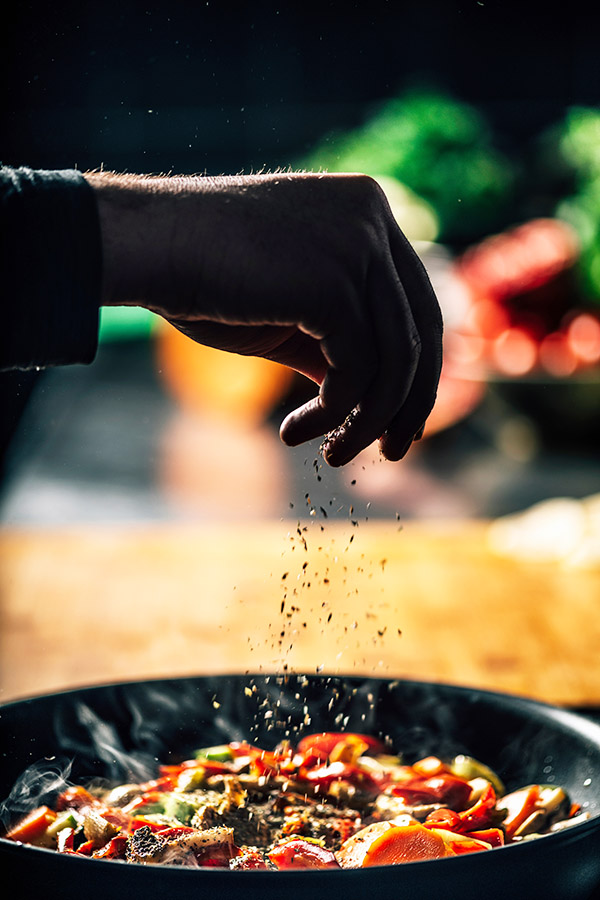
Also, a lot of things really do well with lemon zest and lemon juice at the end. You can add it to things like a chickpea vegetable stew or a chicken soup. A little bit of lemon zest or some lemon juice is lovely on top of fish that’s just come out of the oven. I’m sure you’re used to having fish with lemon, lemon butter, et cetera.
Another example is steak. Take it out of the fridge to come to room temperature for about half an hour, and then salt it at that point. If it’s a fillet, then you should wrap it in string to keep it firm, and then salt it. Put salt and pepper on all the sides, and then leave it to sit until it comes to room temperature. You take the meat out of the packaging, season it, and leave it out on the counter, covering it if you have flies around.
Then you’re going to sear the meat and season it again after that to make sure it’s got enough of the right seasoning. This is the point where you can add your other spices, and even some herbs. Then you’re going to cook it more, possibly in the oven or in the pan. Then you can finish it with flaky salt or something to bring a final kick to your flavoring. You can use salt and pepper throughout the cooking process, but spices at the beginning and herbs at the end.
Let’s talk about specific foods and how to season them. With proteins like steak, you’re going to salt it in advance. Either marinate it with oil and seasonings, or just add salt, like I said, and leave it at room temperature. Pepper can also sometimes be added before searing, although it’s probably best after. You can definitely add herbs and things after you sear it – salt in advance, pepper and herbs after searing, and then you can finish it with butter and more herbs.
For chicken, it’s best to move the skin out the way and season under that a little bit, whether it’s a whole chicken or chicken pieces. Don’t forget to season the cavity if you’re cooking a whole bird. Usually you’re going to be cooking a whole chicken in a slow cooker or as a roast, so you can add your herbs and everything at this point. When we roast chickens, we usually add salt, pepper, thyme, possibly some rosemary, a little bit of onion powder, and maybe something else like smoked paprika or chili powder if we’re feeling like that.
You season fish before cooking it, and you need to season it well. The more seasoning you put on fish before you cook it, the better it’s going to taste. We’d cook it in the oven, and we’d add salt, a little bit of pepper, possibly a little bit of chili powder or onion powder, and lots of lemon juice. Maybe we’d add a little olive oil, and a little bit of butter on top of each piece. You can also use ground almonds or breadcrumbs as a topping if you like that – just sprinkle them over. All those things make your fish really good and really well seasoned. You can even add a little bit of tomato paste or tomato puree to fish or chicken. Then after it’s cooked, you can add your acid and zest – some more lemon juice and some lemon zest is lovely on fish after it’s cooked.
When you’re cooking vegetables, you’re going to salt them before you roast them, and add some oil. They cook very well with oil and salt – it makes them nice and sweet. You can add these to butternut, or anything like that. Usually if you’re steaming your vegetables, you don’t need to add salt or anything until after they’re steamed. The steaming process brings out the flavor, and it’s good for the vegetables if you keep the moisture in them, but you can add some salt after that.
For oven roasted veg, though, you definitely need that oil and salt to bring out the flavor. When you’re roasting things like butternut, sweet potato, and even broccoli or cauliflower in the oven, it’s best to do it with a lid on. I’ve found that if you roast them open in the oven, they tend to burn. Perhaps the oven is too hot, but even with a lowish oven, they tend to burn before they’re soft all the way through. If you put a lid on, however, it helps them to steam a little bit as well as roasting, and then you get a lovely, sweet, soft, butternut or whatever in the oven.
When you’re cooking leafy greens, you salt them after wilting them in the pan. Cook them a bit in the pan, and then salt them. Add some garlic at a point where it can still cook enough so that it’s not going to be still raw while the greens are overdone. Add the garlic during the wilting, and then add your salt after that.
Then there are starches. When you’re cooking pasta, you need to salt your water heavily. Add a good amount of salt and a little bit of oil to stop it sticking together – I just dip the spoon in the coconut oil. With pasta, you’re going to make sure the water’s seasoned, and then when you drain it, you can add some oil and salt, and even some Parmigiano Reggiano to make the pasta taste really good. Your sauce and meat should also be seasoned well. Put them all together, and then you can finish it with some cheese on top.
With rice, it’s good to season your cooking liquid, whether it’s water or broth, with some salt. Then you cook your rice in that, and at the end you can finish it off with some herbs or some citrus zest.
When you’re making sauces and soups, you should taste them repeatedly. If you’ve made a sauce or a soup and it’s a bit bland, then it likely needs salt. If it feels heavy and it’s not such a pleasing flavor, then it often helps to add something like lemon zest or orange zest to lift it. If it tastes sharp, adding a bit of fat helps – maybe some olive oil. If it tastes flat, then it may need something like salt as well as a zest or acid to lift it.
It’s good to balance acid and sweetness. Some acidic ingredients are lemon juice, zest, vinegar, tomatoes, and even yogurt. If you need sweetness, usually you’ll add honey, sugar, or even caramelization like caramelized onion, et cetera. You want to make sure that those two things are balanced.
Here are some mistakes you want to avoid with seasoning – only seasoning at the end, not seasoning enough, not tasting the food during your cooking, and especially not tasting at the end to adjust your seasoning. You might also over-season the food because of impatience. Don’t forget the role of acid – just adding more salt when actually it would help to add some citrus. Don’t burn your spices or add spices at the end, and also, don’t overuse dried herbs at the finish. Fresh herbs are great at the finish, but dried herbs are better to add along the way. When you’re doing lamb or chicken in a crockpot, or making soup or stew, you need to add your dried herbs at the same time as your spices so that they have time to soften, and for the flavor to be infused.
Here’s a quick overview of seasoning in a few different cuisines. In Italian food, you’re going to do well with salt, olive oil, acid, and herbs. Mexican food has a lot of chilies, chili powder, cumin, and then acid and salt. Indian food layers spices; at different times, and to each part of the whole. It has salt, fat and a finishing spice of some kind. Japanese food usually has salt, and then a subtle umami flavor like soy, miso, et cetera.
So, something you can do to practice some of these principles is to cook some roast vegetables in the oven, and then taste them at the end and see what they need. Cook a simple protein in a pan, using some seasoning at the beginning and in the middle, and then finishing it with butter and some herbs. Taste that and see how it feels. How was the layering? How did that affect it? What improved the food’s flavor, and what made you really like it, or how could you work on improving that? This was a long episode, but I hope that you have some things to try, and that you can gain some insight into your food. It’s really simple to just be able to taste and adjust as you learn so that your food can be delicious.