
Today we’re going to be talking about dinnertime in your family – what makes memories, what makes it meaningful, and what makes it special. I’ve been feeling that lately I’ve been leaping up a lot in the middle of meals, both at lunch and dinnertime. I feel like I always have to go and do something, whether it’s packaging something for church cooking, checking if there’s any leftovers that I can pack for a lunch meal for my husband or my son, or checking something that’s still cooking for the next course. Sometimes it’s just that I’m not feeling well, and I’m not keen to stay at the table because there’s just a whole bunch of small talk.
What I really want is connected family mealtimes where we feel close, where the conversation is good and deep, and where it’s a meaningful experience. Now, this can’t happen at every single meal, obviously, but I do want to try and be more present again, and to be aware of that at every meal. I also want to make sure that every week or two we have an extra special meal so that we can feel connected as a family and make some memories.
So, I asked my kids who range from age 11 to age 21, what they feel makes the meal special for them, what they find meaningful, and what they enjoy, just to remind me what’s good. We decided that on Wednesday nights, not every week, but when we can, we’re going to have a special family meal for dinner. Here are some of my kids’ responses.
Firstly, they enjoy it if there’s dessert! They love it when there’s courses because then the meal is slower and the food is more interesting. One of my daughters 😉 said that it’s better if there’s dessert, and if there’s a little chocolate at your place. I’d extend that to include a name tag – anything that makes it extra unusual, different, and special.
My oldest daughter says she likes it when there’s interesting conversation about specific topics instead of random things. She also said not just talking about whatever pops into our heads. Younger teenagers can chatter away easily, but it’s meaningful to sometimes start a proper conversation about a deeper topic. My husband and I like to do that. Sometimes we start a conversation about current events, sometimes about new, interesting technology, theological debates, or about what the kids have learned in homeschool that they want to explore further. Those things definitely help.
My youngest daughter said she likes to do quests. We did this on New Year’s Eve. You give everybody at the table a secret quest, like they need to high-five three people during the meal, or they need to stand up and walk around the table once, or eat a piece of food from someone else’s plate without explanation, or they should jump up, say “Yay!”, and clap their hands, and not say why. This brings some laughter to the table.
One of my daughters said don’t talk about AI too much. Apparently we talk about that too much.
My youngest daughter also mentioned having a Family Fun Night. She loves to have a food fair or a fun fair. A food fair is where each person arranges a stall with a theme from a different country, and has finger food that you can buy at that stall. A fun fair is when we play games and each person has their own stall with games that the others can come play. You have to pay coupons to play, and then you can win prizes.
One of my sons said that he likes it if the food is good, and if it’s a bit unusual, he mentioned things like Beef Wellington. My other son likes to make that sometimes as a gourmet meal. So, eat things that you don’t usually get to eat – things that are interesting. It shouldn’t be too weird, obviously, but maybe have some restaurant-type meals.
It’s not easy, and it needs a bit of preparation, but you can definitely do it if you either cook it yourself with a bit of planning, or buy something fancy ready-made from a grocery store. You could have some kind of pastries, or something like Chinese spring rolls. Any fancy foods in the entertainment aisle are usually a good option. Try something new that you haven’t had before.
One of my daughters said that it’s more memorable if we’re celebrating something significant, even if it’s small. If somebody graduated from something, somebody got their driver’s license, somebody finished a school project, achieved a goal, or anything simple, you can celebrate that together. Then it gives a bit of a focus to the meal.
All of us being there makes it more special. If one person is missing, it’s not quite the same. It’s also important to have all of us properly present. We should be engaged with each other, not thinking about other things, not distracted, but focused. We should have a special meal on a night when everyone can be present. Then we should be getting into the conversation, not just hopping around topics, but really talking, and hearing from people – hearing their hearts makes it more meaningful.
Hospitality and having visitors is also important.
Somebody mentioned talking about the past in our family. This can be talking about things we’ve done together; memories, but also the kids asking mom and dad questions like “What was this like when you were young?” Or “How did you do this when you were young in your family?” “What do you remember about this time?” et cetera.
To be able to enjoy these meals, it’s good to not do it too often. If we did it every day, it wouldn’t be quite as special, right? It would be much effort, and it wouldn’t be a set-aside time. Doing it once every week or two works great.
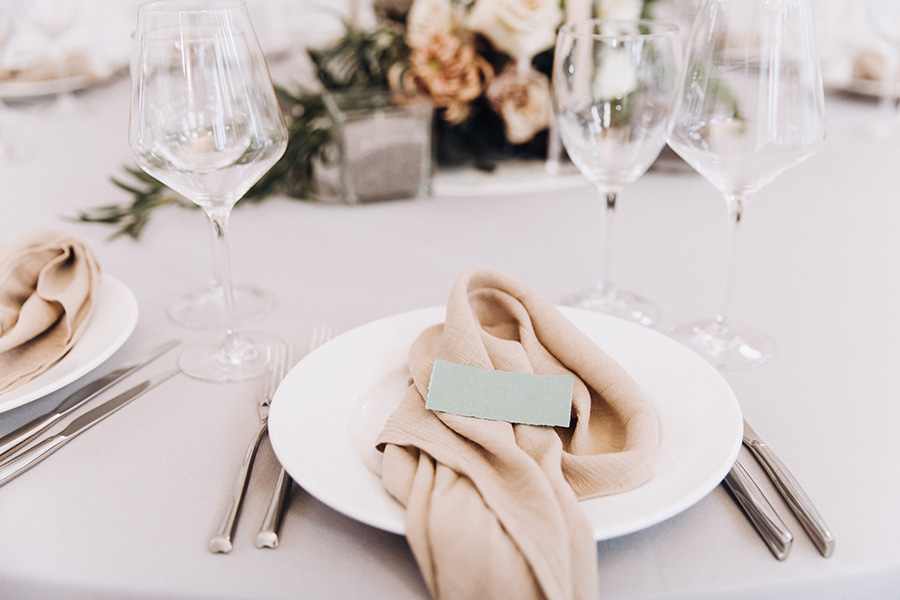
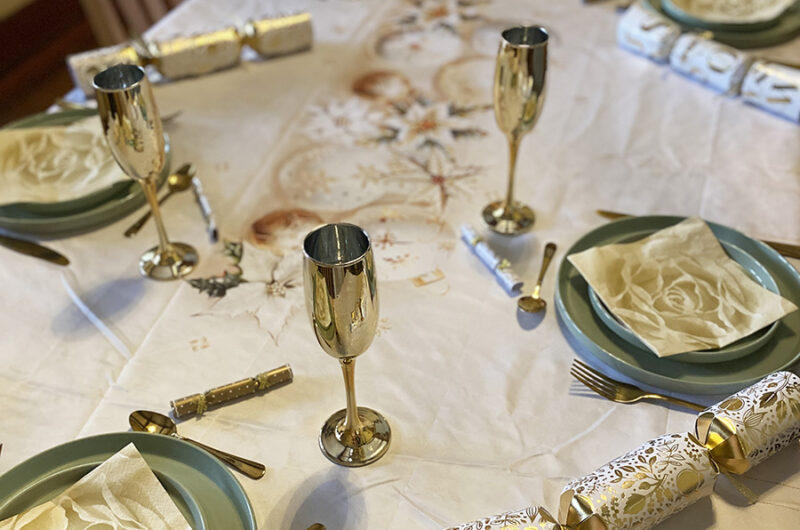
Doing a special table setting and making it look nice makes it enjoyable, as my daughter said. You can put special things on the table – cute little things or unusual things to notice. I mentioned the little chocolates. The atmosphere is really important – setting the scene, putting on a bit of music, or anything that makes it fun. You can use fancy folded napkins and fancy lighting.
Then, as a different kind of evening, somebody mentioned being relaxed and having pizza. It’s nice to have a low maintenance meal after a week of work. This is meaningful in a different way. It’s not a high effort meal; it’s low effort. Mom is not so busy, and there’s low stakes. You can relax, you don’t have to talk that much, and you can stay up later. We do this on a Friday night – good food and good conversation in this case would be replaced by pizza and a movie.
These were the responses to what makes it special for our kids, based on how things have been in our family in the past. We’re definitely going to be including some of these again.
Let’s talk in a more structured way about what makes dinnertime special. The atmosphere is a big one. I know I’ve talked about some of these things before, but this is something really close to my heart, so I think it’s good to keep coming back to these. Atmosphere means music, lighting, table decor, the way you dress – anything that is different to the norm and shows that you’ve put in a bit of effort. Think about intentionality.
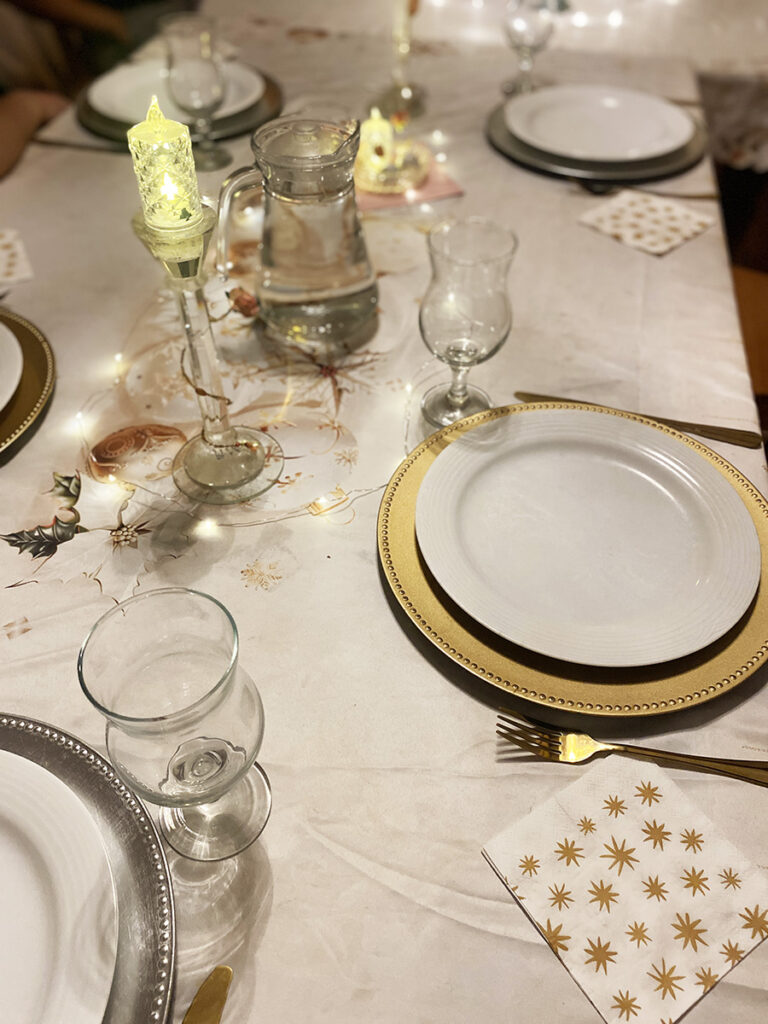
Candles or fairy lights are lovely. You can use electronic candles if you don’t use the ordinary kind, and small, battery powered lamps are beautiful as well. They often have different settings. The table should be cleared of clutter even if the food is simple. The clear table says we’re present, and we’re focused on the mealtime. You can use Spotify or something similar for music. Use some playlists that you’ve made for that purpose or search for “French bistro instrumental music” or “Celtic instrumental,” or anything like that. Often words are distracting, so instrumental works great.
It helps if you dress up a little bit. Just say something like you have to have shoes on, or wear a dress instead of shorts if you’re a lady, or something like that.
Your table decor obviously makes a big difference. It shows that you care.
You just need a clean, fresh tablecloth, maybe cloth napkins instead of paper ones, or under plates. Maybe you have special cutlery or silverware that you keep for this purpose. Elegant glasses add a lot to the table setting. You can use layered plates – it’s nice to have a plate on top of another plate if you’re having different courses. You can have a side plate for bread or salad. If you have any fancy plates that you like to use, don’t keep them in the cupboard – enjoy them.
You can do napkin folding. We’ve got some shorts on our YouTube channel, FamilyFoodforMoms. There you can see how to fold everything from a shirt to a Christmas tree. You can put anything that works and that you enjoy on your table. It’s lovely to put fairy lights in the middle of the table. Obviously, some flowers or some greenery is gorgeous. You can use your candles, flowers, and glasses in an interesting way. Use unusual containers and serving dishes – we’ve got some that are shaped like little hearts. Different shapes of platters are great.
A good atmosphere tells your nervous system that it can relax, and then people talk more openly. They’ll laugh more, they’ll be able to share true feelings, and then it’s easier to make memories.
Then let’s talk about the food. It doesn’t have to be complex, but taking care makes it special. Something warm like soup or bread is very comforting to start the meal. Add an intentional touch to your food, like fresh herbs or a homemade sauce that you wouldn’t usually use to go with a meat. You can have a special side dish that somebody loves as an appetizer or on the side.
Also, things like fondues or shared bread to tear and dip somehow encourages connection between people, and it’s different to the usual mealtime. What makes it special isn’t always the fanciness, but the fact that you thought about it, thought about the people, and you put a little love into the food.
The change in pace is so significant. Slowing down is magic. Rushing or leaping up kills the meaning. I have to re-learn this so often, and remind myself not to jump up in the middle of a meal to do something. Showing everybody that you’re fully present and that you’re slowing down is so valuable.
Have everyone sit down at the table at the same time, with no phones at the table, and just stay and enjoy it. Smile at each other. Take part in the conversation. Show that you’re interested. Eat your meal slowly. Keeping eye contact with people in between so that you’re not off in your own world, just eating. Make the meal about fellowship and about each other.
Your conversations will get deeper naturally when the pace slows. Conversation is another big part of a special meal. It doesn’t have to be forced. We don’t need to get permission to speak, making it unpleasant. But sometimes bringing a valuable topic to the table helps. Dad can get involved with this, and mention something that he found interesting, or that the kids would find interesting. Then, hopefully, conversation will come out of that. As I said earlier, maybe this conversation can be about something to do with a biblical worldview; about creation, about the news, about something learned in school, about his day, about technology, or anything that the kids are learning about. It should be something that they find interesting and they want to talk more about. Just be creative.
You can use conversation starter cards. We have some on our website at familyfoodformoms.com/conversation that you can download. You could ask “What caught your attention today” or “What felt easy today and what felt hard?” “Tell me more about that.” “What would you do if you were in that situation?” Avoid correcting and making it forced. The goal is for everybody to feel heard and to feel part of the conversation. It’s good when everyone feels as if they belong – if they have a role, even a tiny one, like helping to set the table, choosing the music, pouring the drinks, passing dishes, helping to clear the table, helping to fold the napkins, and things like that.
As I mentioned at the beginning, one of my kids talked about quests and how they’re fun to do during the meal. Give your younger kids or your more fun-loving kids a little quest to do that the others don’t expect. That’ll make everyone laugh.
Simple rituals are also meaningful. Have meaningful moments, and make good memories. You can light a candle together for a specific reason, or say a shared thank you. Perhaps if you’re celebrating a small win like somebody getting their driver’s license, you could give them a shared card from all of you – anything that becomes a special moment.
Again, giving your full attention is one of the rarest but most valuable things you can do at a dinner table. People remember how they were looked at. Keep eye contact while someone’s talking. Don’t interrupt. Laugh together, and allow the laughter without rushing on. Let the mealtime and the special conversation linger.
Ending well is also important. Don’t suddenly jump up and end things prematurely. A nice dessert, a cheese plate with some fruit, or some tea helps. Have a last shared thought with a question that everyone can answer once they’re relaxed. Sit together for five more minutes after the plates are empty. I’m usually very tempted to jump up and get things cleared away, especially on a school night. But these unhurried mealtimes and endings are really valuable.
It doesn’t have to be perfect or impressive; it just has to be meaningful – putting in a bit of an effort and enjoying the time together. Next time, I’m going to talk about some practical ideas for actual activities you can do at or around dinnertime – fun things and meaningful things; a whole lot of ideas.


